Time of Use Battery Savings: Does the Math Add Up?

Reviewed on August 5, 2026. Next review: September 5, 2026.
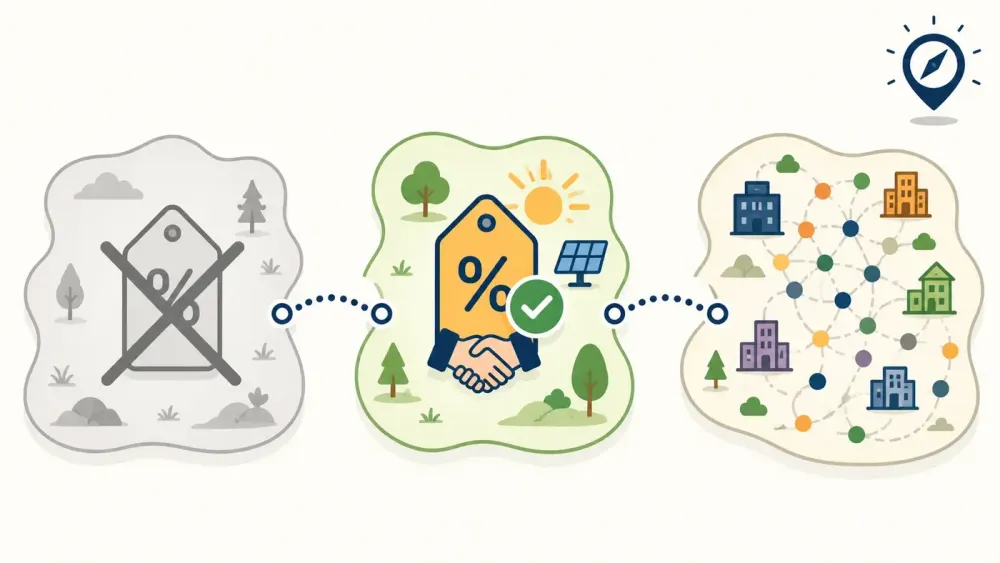
In the United States, the 30% federal residential solar tax credit (Section 25D) ended for systems placed in service after December 31, 2025, per IRS guidance, and a cash or loan purchase in 2026 gets none of it. What survived: a separate business-side credit, Section 48E, that a leasing or PPA company may still claim on systems it owns through 2027; net metering, which still exists in most states but often pays less for exported power than it used to; and a patchwork of state and utility programs that vary too much to summarize in one number. This page is a map of that landscape, not the full answer to any one part of it. Each section below routes to a dedicated page for the depth.
This is the single most-corrected fact on this site, so it's stated once, here, and every other page links back to this one instead of re-arguing it. The Residential Clean Energy Credit under Section 25D allowed a homeowner who bought a system with cash or a loan to claim 30% of the qualified cost back on their federal taxes. Under the One Big Beautiful Bill Act, signed July 4, 2025, that credit is not available for any property placed in service after December 31, 2025, per IRS.gov. If your system was operating by that date, you can still claim it on that year's return, and unused credit carries forward; if you buy in 2026 or later with cash or a loan, the federal credit for that purchase is $0. The full mechanics, including the carryforward rule for a 2025 install, live at What Changed for Solar Buyers When the 30% Federal Credit Expired and Carrying Forward an Unused Credit From a 2025 Install.
Section 48E is not a homeowner tax credit and is not a continuation of Section 25D under a new name. It's a business-side investment tax credit that a company can claim on qualifying clean energy property it owns. The relevance to a homeowner is narrow but real: if you lease a system or buy its power through a PPA, the company that owns the equipment on your roof, not you, may be able to claim 48E, and some of that value may or may not show up as a lower rate in your contract, depending on the company. IRS Notice 2025-42 set the construction-start and placed-in-service deadlines that govern how long this pathway stays open for a given project, dates that a 2026 reader is already living inside. This is a genuinely different provision reaching residential customers by a different route than 25D ever did, and it deserves its own page rather than a summary here: see Section 48E: Why Leases and PPAs Still Get a Federal Credit for the mechanism, the deadlines, and what a lease or PPA offer actually implies about it.
Net metering is the billing arrangement that credits you for electricity your system sends back to the grid when it produces more than your home is using. It still exists in the large majority of US states in some form, and it remains one of the mechanisms that makes a grid-tied system without a battery workable for most homeowners. What has changed, state by state and on different schedules, is how much that exported power is worth. A number of states have moved away from crediting exports at the full retail rate toward lower, separately calculated export rates, a shift most visible in California's transition away from its earlier net metering structure. This page will not state what your export rate is, or was, because that is set by your state and your specific utility, not nationally. Net Metering Explained for US Homeowners covers the mechanism in full and is the right next stop if this is your actual question.
Below the federal layer, individual states and utilities run their own rebates, tax exemptions, SREC (solar renewable energy certificate) markets, and battery-specific programs, and these change on their own schedules, independent of anything federal. There is no honest way to compress fifty states' worth of independently legislated and administered programs into one national figure, and any page that tries is either out of date the moment a single state changes its program, or was never precise in the first place. That fragmentation is the reason this cluster exists as a set of dedicated, state-aware pages rather than one long article: each program category gets checked against a named source for the specific state it applies to, rather than asserted as a blanket national fact.
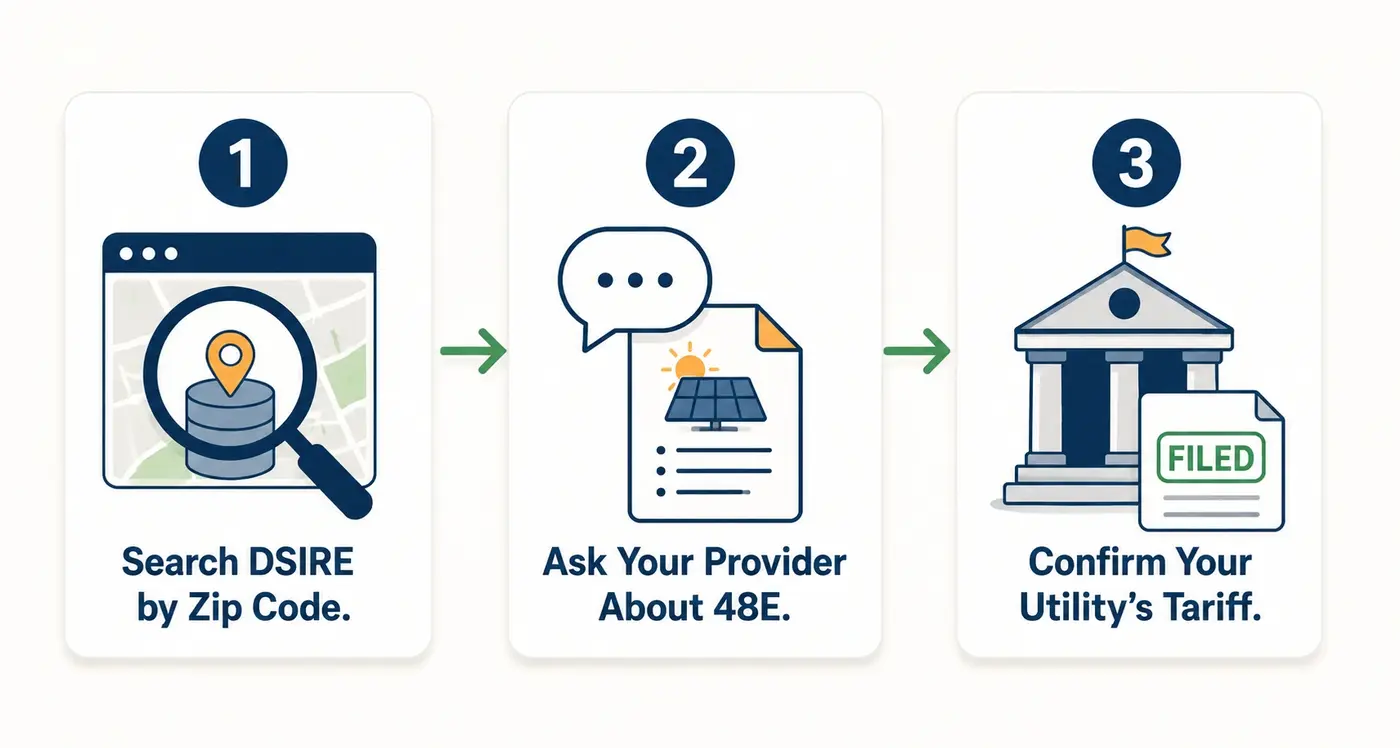
Rather than trust a general claim, check these three things directly for your own situation:
If you already know your specific question, skip straight to it: the federal credit's status is covered in depth at Is There Still a Federal Solar Tax Credit in 2026?, the lease and PPA route to 48E at Section 48E: Why Leases and PPAs Still Get a Federal Credit, what to do if you installed in 2025 and couldn't use the full credit at Carrying Forward an Unused Credit From a 2025 Install, and how export compensation actually works at Net Metering Explained for US Homeowners. If your real question is whether any of this still adds up to a financial win for your house, that question sits in a different cluster entirely: start at Are Solar Panels Still Worth It in the US in 2026?.
Is there still a 30% federal solar tax credit in 2026? Not for a cash or loan purchase. Section 25D ended for systems placed in service after December 31, 2025, per IRS guidance. A lease or PPA company may still access a separate credit, Section 48E, on systems it owns. See Is There Still a Federal Solar Tax Credit in 2026? for the full picture.
What incentives are actually left for someone buying solar with cash in 2026? No federal credit for the purchase itself. What's left depends entirely on your state and utility: possible rebates, tax exemptions, SREC markets, or net metering, none of which this page will state a number for without checking your specific location on DSIRE.
Does net metering still exist in 2026? In most states, yes, in some form. What has changed in many states is the export rate, which in a growing number of places pays less than the full retail rate it once did. Check Net Metering Explained for US Homeowners and your own utility's tariff for your specific rate.
If I installed solar in 2025, do I still get the old incentives? Eligibility for the 25D credit depends on when your system was placed in service, not when incentives later changed. A system operating by December 31, 2025 remains eligible for that year's credit, and any unused amount carries forward. See Carrying Forward an Unused Credit From a 2025 Install.
Why doesn't this article just list every state's incentives in one table? Because fifty states' worth of independently administered, independently timed programs cannot be compressed into one accurate table without going stale within weeks. Each program category on this site routes to a page that checks a named source for the state it actually applies to, which is slower to build but doesn't mislead.
One email a week with new guides, tips, and solar news. Zero fluff, no sales pitch.