Do I Need a Battery With Solar? The Real Trade-Off


United States only. This page names no company, quotes no figure and contains no price. It is about how to read a clause, not about which product to buy.
A production guarantee is worth exactly what its baseline, its measurement method, its exclusions and its remedy say it is worth. Two guarantees with the same headline can be entirely different instruments, and the difference lives in four paragraphs almost nobody reads.
Sorting these first, because a proposal will use them interchangeably and they are not the same.
The panel manufacturer's output warranty. A commitment from the panel maker that the panels themselves will still produce at or above a stated proportion of their rated output after a stated period. It is about the panels, not about your system, and its remedy is normally panels or a payment for panels.
The installer's or provider's production guarantee. A commitment that your specific system will produce a stated amount of electricity over a stated period, with a remedy if it does not. This is the one this article is about, and it is a promise from the installer or the finance provider rather than from the panel maker.
A savings guarantee. A promise about money rather than about kilowatt-hours. Be most careful here, because savings depend on future electricity rates, which nobody controls, so a savings guarantee is either narrowly defined or it is not a guarantee.
Which one you are being offered is the first question, and the answer is in the document rather than in the conversation.
Read these in your own contract. This is a fifteen-minute job and it is the whole of the due diligence.
A guarantee measured against a number the seller chose is only as good as that number.
The proposal contains an estimated annual production, and the guarantee usually promises some proportion of it. So a company can offer a generous-sounding guarantee simply by having estimated conservatively, and a company with an optimistic estimate and a strict guarantee is offering less protection than it appears to.
Which means you cannot evaluate the guarantee without evaluating the estimate, and what makes a production estimate realistic and what inputs to check is the prerequisite read.
Ask: is the guaranteed figure the same as the estimated figure, or a proportion of it, and what proportion?
Annual, multi-year averaged, or cumulative over the whole term?
This matters more than it sounds. A guarantee assessed each year gives you a claim in a single bad year. One assessed cumulatively over many years means a shortfall now can be offset by a surplus later, and you may wait a decade to find out whether you have a claim at all.
If the guarantee depends on monitoring, and the monitoring belongs to the installer, then the party who owes you money is also the party measuring whether they owe it.
That is not automatically improper and it is worth knowing.
Ask: what device measures it, who has access to the data, what happens if the monitoring fails, and can I get the data myself?
A monitoring outage that voids a year's measurement is a real clause and it appears in real contracts.
This is where guarantees are usually won and lost, and the list is longer than people expect. Common exclusions include:
Read the exclusion list before the headline. A guarantee with a long exclusion list and a short remedy section is a marketing artifact.
What actually happens if the system underperforms?
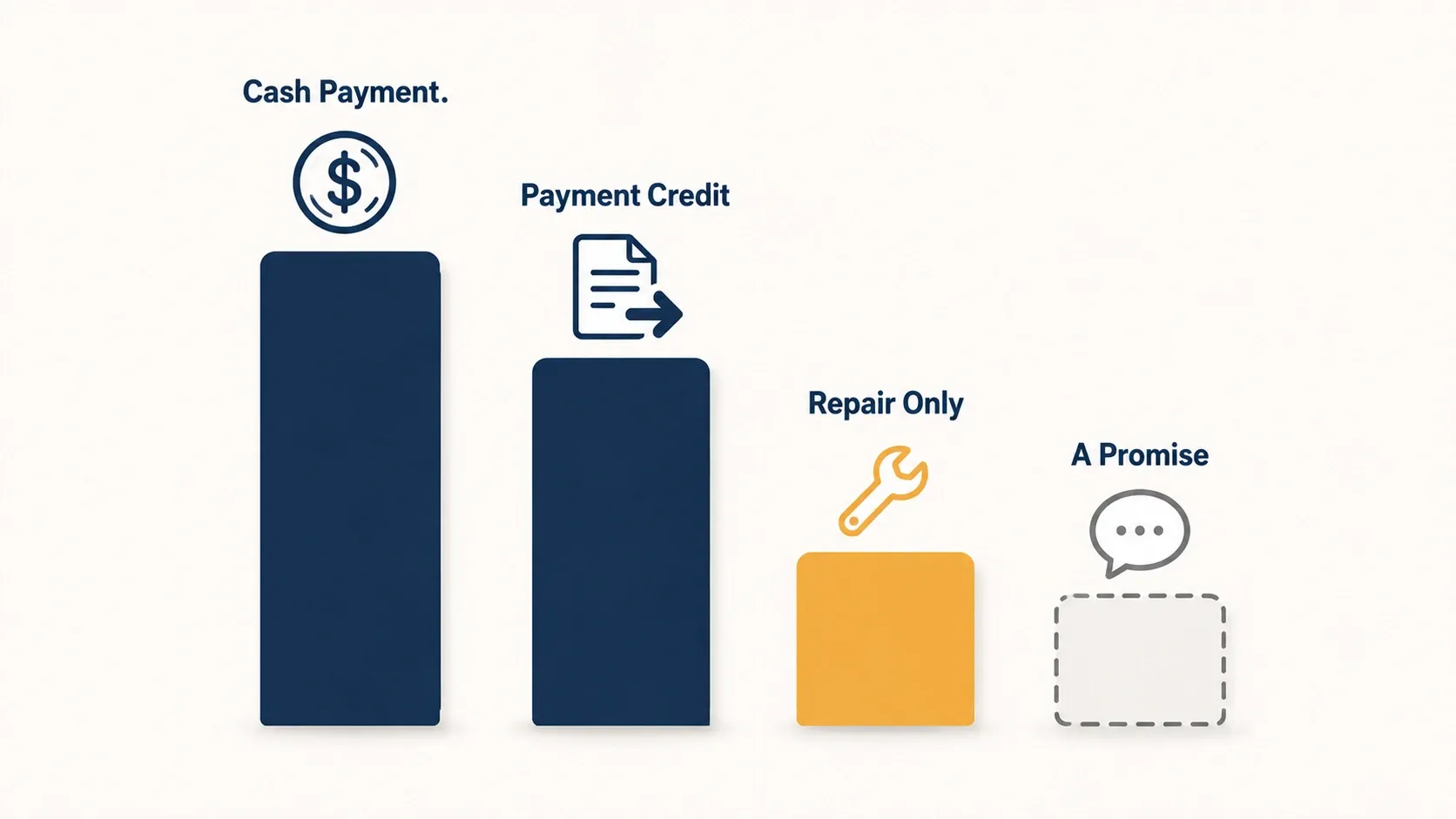
The possibilities are very different from each other:
And ask what the rate is. A shortfall paid at a rate far below what you pay your utility is a partial remedy.
The guarantee is a contractual promise from a legal entity. If that entity ceases to exist, the promise generally goes with it, unless it is backed by a third party.
Ask: is this guarantee insured or backed by anyone other than you, the seller? The same question applies across the whole set of warranties attached to a system, and the answer for a production guarantee is usually that it does not survive the company that made it, unlike the panel and inverter warranties, which belong to their manufacturers.
A guarantee running longer than the company has existed is a promise about a future you cannot verify.
Being fair to the instrument, because a good one is worth something.
It aligns incentives at design time. A company that will owe you money for underproduction has a reason not to inflate the estimate, and to be honest about shading.
It gives you a defined route when something is wrong. A system underproducing with no guarantee means arguing. With one, there is a process.
And on leases and power purchase agreements it can matter more, because there the provider owns the system and you are paying for its output. The difference between leasing and buying changes who bears which risk, and a production guarantee sits differently in each.
It does not protect against a bad estimate, because the estimate is usually the baseline.
It does not protect against a bad tariff outcome. What you are paid for exported electricity is set by your utility and your state, not by your installer, and no production guarantee touches it. What net metering is and why the version matters is that separate risk.
It does not cover equipment failure. That is the manufacturer warranties.
And it does not make a system worth buying. A guarantee is a clause in a contract for a thing you have decided to buy, not a reason to buy it.
If the answers are not in the contract, the guarantee is a conversation rather than an instrument.
Is a production guarantee the same as a panel warranty? No, and a proposal will often use the terms interchangeably. The panel manufacturer's output warranty is a promise from the panel maker about the panels themselves, and its remedy is normally panels or a payment for panels. A production guarantee is a promise from the installer or the finance provider about what your specific system will produce, with a remedy if it does not. A savings guarantee is a third thing again, a promise about money rather than about kilowatt-hours. Which one you are being offered is a question for the document, not the conversation.
Can a guarantee sound generous and still be worth less? Yes, and this is the most common way it happens. The guarantee is usually measured against the estimated annual production in the proposal, a number the seller chose. A company that estimated conservatively can offer a generous-sounding guarantee cheaply, while an optimistic estimate paired with a strict guarantee offers less protection than it appears to. You cannot judge the guarantee without judging the estimate behind it.
Who measures whether the system met the guarantee? Often the installer, through monitoring the installer owns, which means the party who would owe you money is also the party measuring whether they owe it. That is not automatically improper, and it is worth knowing about. Ask which device measures production, who can access the data, whether you can get it yourself, and what the contract says happens if the monitoring fails, because a monitoring outage that voids a year's measurement is a real clause that appears in real contracts.
Does the guarantee survive if the company does not? Usually not. A production guarantee is a contractual promise from a legal entity, so it generally goes when that entity does, unless a third party backs or insures it. Panel and inverter warranties are different, because they belong to their manufacturers. Ask in writing whether anyone other than the seller stands behind the guarantee, and treat a term longer than the company's own history as a promise about a future you cannot verify.
Will a production guarantee protect my savings? Not by itself. It is a promise about electricity produced, not about money, and it does not touch what your utility pays you for exported electricity, which your utility and your state set. It also does not protect you against an inflated estimate, since the estimate is normally the baseline, and it does not cover equipment failure, which sits with the manufacturer warranties. Be most careful with anything sold as a savings guarantee, because future electricity rates are outside anyone's control.
Sort which of the three things you are being offered, then read six clauses: the baseline and how it relates to the estimate, the measurement period, who measures and with what, the exclusions, the remedy and its rate, and whether the promise is backed by anyone other than the company making it. A generous guarantee against a conservative estimate is worth more than a strict one against an optimistic estimate, which is why you cannot judge the guarantee without judging the estimate first.
One email a week with new guides, tips, and solar news. Zero fluff, no sales pitch.