Do I Need a Battery With Solar? The Real Trade-Off

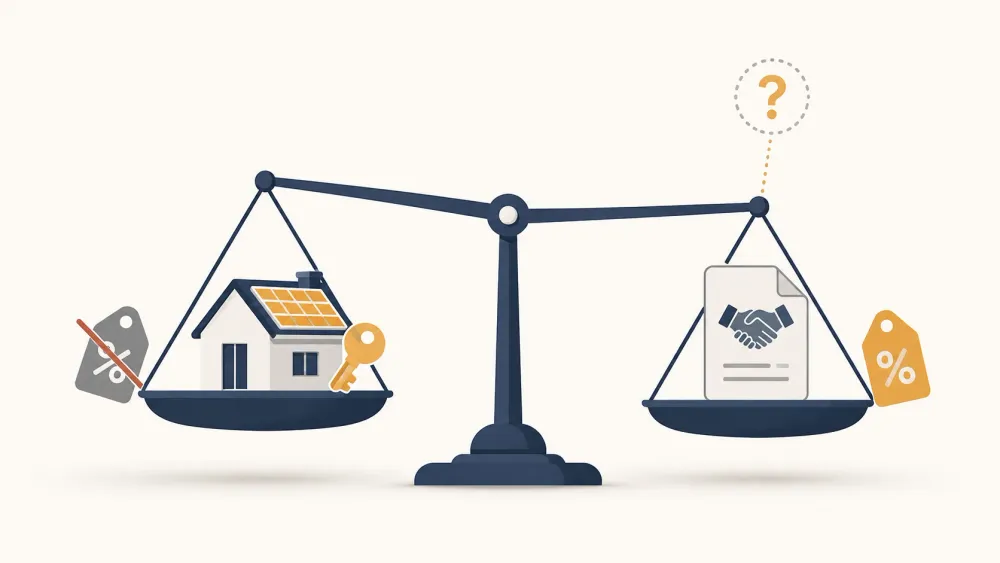
In the US, a homeowner who buys a solar system with cash or a loan in 2026 no longer qualifies for the federal Section 25D credit, which the IRS confirms expired for systems placed in service after December 31, 2025. A company that leases you a system or sells you its power through a PPA may still be able to claim a separate, business-side credit under Section 48E. That gap is real and sourceable, but it does not by itself prove leasing is now the better deal, because how much of that credit value a lessor actually passes into your rate is not published anywhere. See Are Solar Panels Still Worth It in the US in 2026? for the wider economics question this article sits inside.
Reviewed on August 7, 2026. Next review: September 7, 2026. This article covers a federal tax rule and two deadlines set in 2025 legislation. State and utility rules layered on top of it vary by location and change on their own schedule, so treat every date below as current only as of the review date above.
Search for this topic today and you will find a wave of 2026 content already declaring a verdict: leasing now beats buying, or buying still wins by a specific dollar margin over 25 years. Neither claim is sourced to anything a reader can check. What actually changed is narrower than either headline. Before 2026, a homeowner who bought a system outright could claim 30% of the qualified cost back through Section 25D, according to IRS guidance on the credit. That option ended for systems placed in service in 2026 or later. A company that owns a leased or PPA-financed system, by contrast, may still be able to claim a credit on that same equipment through a different part of the tax code, Section 48E, which was not repealed the same way. That is the asymmetry. Whether it moves in your favor depends on a number no source publishes, which is the subject of the rest of this article.
If you buy a system with cash or a loan and it is placed in service in 2026, the IRS confirms there is no federal credit to claim on that purchase. The 30% Section 25D credit is gone for homeowner-owned systems going forward; only systems that were already completed and placed in service on or before December 31, 2025 could use it, and even then the credit had to be claimed for the year the system went into operation, not the year it was ordered or paid for. What buying still gives you is full ownership from day one: every kilowatt-hour the system produces belongs to you, there is no ongoing payment to a system owner, and no contract governs what happens if you sell your home. For a realistic sense of what a purchased system costs before financing, see Home Solar Panel Cost in the US, and for how the 25D expiry changes the math on incentives specifically, see What Happened to the Solar Tax Credit, and What Now. Financing a purchase with a loan does not restore the credit; a loan only changes who fronts the cash, not who owns the system or what the IRS allows.
Under a lease or a PPA, the solar company, not you, owns the equipment on your roof. Because the company is the legal owner, it is the one filing as a business, and Section 48E is a business-side investment tax credit rather than the individual credit that expired. The IRS's guidance on beginning-of-construction rules for Sections 45Y and 48E sets two dates that govern how long this pathway stays open: a safe-harbor deadline for starting construction, generally July 4, 2026, twelve months after the underlying 2025 law's enactment, and a placed-in-service deadline of December 31, 2027 for projects that did not meet that earlier construction-start test. By the time you are reading this, the July 2026 construction-start date has already passed. That does not mean the door is closed. Companies that leased or sold PPAs across many homes often lock in construction-start status for a batch of projects in advance, so an individual installation offered to you today may or may not fall inside that earlier safe harbor. From outside the company, there is no way to check which applies to your specific offer, which is exactly the kind of detail worth asking about directly, covered further down.
Here is the part most 2026 content skips. A business owning a system and being eligible to claim a credit is not the same thing as that credit showing up in your monthly rate. A leasing or PPA company that captures a federal credit keeps the right to decide how much of that value it passes through to you as a lower rate, and how much it keeps to cover its own financing costs, installation costs, insurance, and margin. No named source, not the IRS, not the Department of Energy (DOE), not the DSIRE incentive database, publishes what that pass-through rate actually is, because it is a private business decision made contract by contract, not a public program. That means a comparison that assumes a specific percentage of 48E value reaches your lease rate is not a documented fact, it is a guess dressed up as a calculation, and this article will not print one.
The number that actually decides lease-versus-buy for you is not a national average or a tax code section. It is the specific rate the leasing or PPA company quotes you, per kilowatt-hour or per month, compared against your own utility's rate for the same usage. If a leasing company has genuinely absorbed a meaningful share of a 48E credit into your offer, that should show up as a lower quoted rate relative to buying an equivalent system outright, not as a marketing claim about the tax code. Comparing your quoted rate to your utility bill also means knowing your actual effective rate per kilowatt-hour, not just the number printed on the bill; see Does Your Electricity Rate Decide Whether Solar Is Worth It for how to work that out. State and utility rules on top of all this vary by where you live. DSIRE, the database that tracks state and utility incentive programs, is the place to check what applies in your specific state and to your specific utility, because a program available to a buyer in one state may not exist in another, and a lease-friendly rate structure in one utility territory may not exist in the next one over.
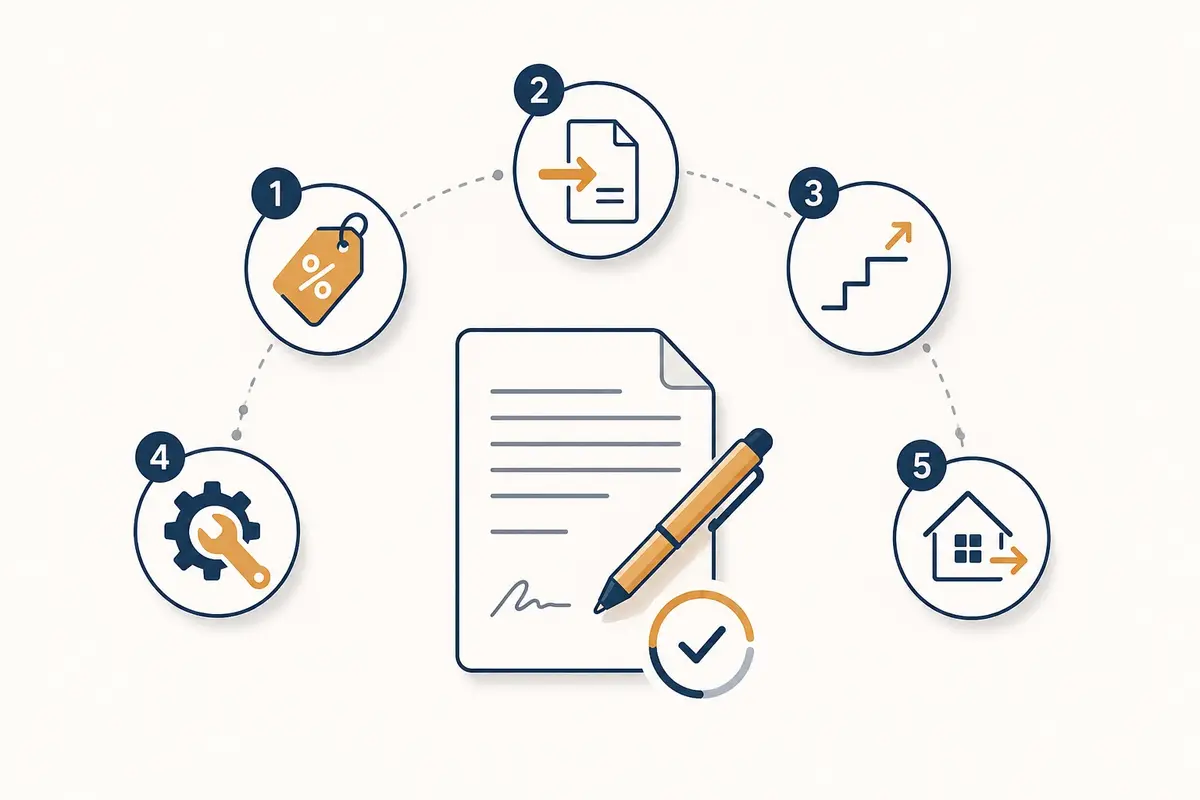
Before treating any lease or PPA quote as comparable to a buying quote, ask the provider directly:
A provider that cannot answer the first two questions plainly is not a reason to walk away automatically, but it is a reason not to accept a comparison built on an assumed tax benefit. For a broader look at how lease and PPA offers get marketed, including offers framed as free, see Free Solar Panels: What's the Catch, and for how leasing sits alongside cash, loan, and other purchase paths, see Cash, Loan, Lease or PPA.
The table below compares the structural facts, not a dollar estimate that depends on an unpublished number.
| Factor | Buying (cash or loan) | Leasing or PPA |
|---|---|---|
| Who owns the system | You | The leasing or PPA company |
| Who can claim a federal credit in 2026 | No one; Section 25D no longer applies to systems placed in service in 2026 or later, per IRS guidance | The system's owner, potentially, through Section 48E, if the project meets the applicable construction-start or placed-in-service deadline |
| Who handles maintenance and repairs | You, though many installers sell separate warranties | Typically the lessor or PPA provider, as part of the written contract |
| Payment structure | Fixed loan payment or a single upfront cost; no built-in yearly increase | Often includes a written annual escalator clause; ask for the exact percentage and term |
| What happens at resale | The system stays with the home as a fixture; a buyer evaluates it like any other home feature | The contract typically must transfer to the new owner or be bought out; this is a separate negotiation from the home sale |
| Where incentive value goes | Directly reduces what the buyer owes, when a credit or rebate applies | Retained by, or passed through in an amount the company does not publish, by the system's owner |
Did the federal solar tax credit really flip in favor of leasing in 2026? Not as a settled fact. The Section 25D credit for homeowner-owned systems expired December 31, 2025, per IRS guidance, while Section 48E remains available to business-owned systems including leases and PPAs, subject to its own deadlines. That is a documented asymmetry, not proof that leasing produces a better outcome for any specific reader, because the amount of 48E value a lessor passes into your rate is not published.
Can I still get a federal tax credit if I buy solar in 2026? No. The IRS confirms Section 25D does not apply to systems placed in service in 2026 or later. A state or utility incentive may still apply depending on where you live; check the DSIRE database or your utility directly.
Why can a leasing company claim a credit that I cannot claim as a buyer? Because the leasing or PPA company, not you, legally owns the equipment. Section 48E is a business investment tax credit tied to ownership, financing structure, and construction timing, separate from the individual credit that expired.
Is a lease or PPA always cheaper than buying in 2026? There is no universal answer. It depends on the exact rate you are quoted compared with your own utility rate, whether any escalator applies, and how the ownership question affects your home's resale. Treat any general claim that leasing "wins" in 2026 as unsourced until you have your own numbers.
What happens to a solar lease or PPA if I sell my home? The contract typically needs to transfer to the new owner or be bought out before closing; this varies by provider and is a separate negotiation from the sale of the home. Ask about this directly before signing, since it affects both your resale timeline and the buyer's.
Where can I check what incentives actually apply in my state? The DSIRE database (the Database of State Incentives for Renewables and Efficiency) tracks state and utility-level programs by location. Because the federal picture described here is only one layer, check DSIRE for your own state and utility before comparing any quote.
One email a week with new guides, tips, and solar news. Zero fluff, no sales pitch.