Time of Use Battery Savings: Does the Math Add Up?

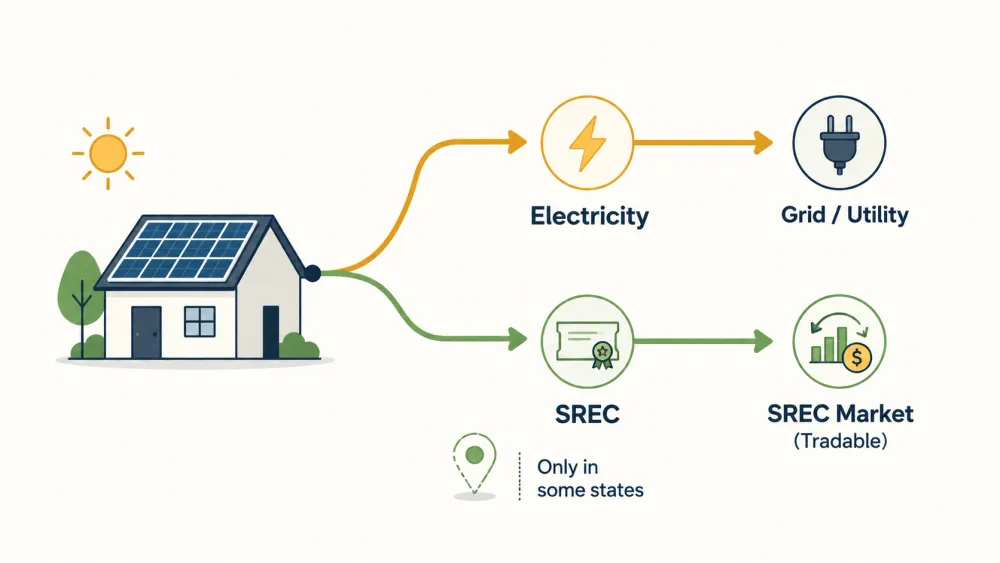
A solar renewable energy certificate (SREC) is a tradable instrument created for each megawatt hour of solar electricity generated. It is separate from the electricity itself. The US Environmental Protection Agency describes a renewable energy certificate as "a market based instrument that represents the property rights to the environmental, social, and other non-power attributes of renewable electricity generation." SRECs exist only in states whose renewable portfolio standard requires electricity suppliers to source a specific share from solar, and the EPA notes that their monetary value in those state markets "is determined by supply and demand." If your state has no solar requirement, there is nothing for a supplier to buy, and you have no SREC income.
Sources for this article were verified against the EPA and program administrator materials at the time of writing. This is general information about how SREC markets work. It is not tax, legal or financial advice, and it is not a projection of income. SREC prices move, and state programs open and close.
Separate two things in your head and the whole topic becomes simple.
The electricity is the physical power your system produces. It either serves your house or gets exported to the grid, and your utility's net metering or net billing tariff decides what the export is worth. That is covered in Net Metering Explained for US Homeowners.
The certificate is the environmental attribute of that same power, unbundled and sold separately. One SREC is created per megawatt hour, which is 1,000 kilowatt hours of production. It is bought by electricity suppliers who must meet a state requirement.
These are two different revenue lines from one system, and they are governed by two different sets of rules. A homeowner can have excellent net metering and no SREC market, or a weak export rate and an active SREC market, in the same state.
An SREC market is downstream of a policy decision. A state adopts a renewable portfolio standard, which obliges electricity suppliers to source a share of their supply from renewables, and then that standard either does or does not contain a solar specific carve out. Where the carve out exists, suppliers have a compliance obligation they can only meet with solar attributes, so a market forms and certificates acquire a price. Where it does not, solar attributes have no compliance buyer and the price collapses toward whatever the voluntary market will pay, which is a different and generally much smaller thing.
The EPA's page on state SREC markets does not itself publish a state list. It points readers to a map of state renewable portfolio standards with solar or distributed generation provisions, and to DSIRE for state specific detail. That is the right level of caution to copy, and this article copies it: the reliable way to know whether your state has an SREC market is to look up your state's current RPS provisions, not to read a list in an article. Lists of SREC states circulate widely and go stale when a legislature amends or repeals a standard, which does happen.
This is the EPA's own point and it is missing from nearly every page that ranks for this topic.
When you sell your SRECs, you sell the environmental attributes of your generation. The EPA states that homeowners who sell their SRECs "preclude themselves from making solar power 'use' claims or claims on reducing their carbon footprint."
In plain terms: after the sale, the buyer owns the right to say that solar power was used. You still have the panels, you still have the electricity, and you still have the bill savings. What you no longer have is the environmental claim, because you sold it. That is not a trick and it is not hidden, it is just what the instrument is. But if part of your reason for installing solar was to be able to say your home runs on solar, selling the certificates is a decision you should make knowingly rather than as a default box on a form.
This is where money quietly changes hands, and it is the second thing missing from most coverage.
If you own the system outright, the certificates are generally yours to register and sell, subject to your state's program rules and registration requirements.
If a third party owns the system, as under a lease or a power purchase agreement, the environmental attributes commonly belong to the owner rather than to you. That is a contract term, and it is one of the more valuable things sitting in the paperwork. Solar Lease vs Buy in 2026: What Actually Changed and The "Free Solar Panels" Catch, Explained cover how third party ownership works generally, and the certificate question belongs on that same list of things to ask about before signing.
In some state programs the payment does not route to the homeowner at all. Illinois Shines is a documented example. The program is statutorily known as the Adjustable Block Program, is administered by Energy Solutions on behalf of the Illinois Power Agency, an independent state government agency, and provides incentives through the purchase of renewable energy credits by Illinois utilities. Its own materials state that the incentives go to approved vendors and "may be passed on to customers as savings."
Read that once more, because it is the whole point. In a structure like that, the certificate value is real, but whether any of it reaches you depends on how your vendor prices your system. The correct question is therefore never "does my state have SRECs." It is "in my state's program, who receives the payment, and what in my contract obliges any of it to reach me?"
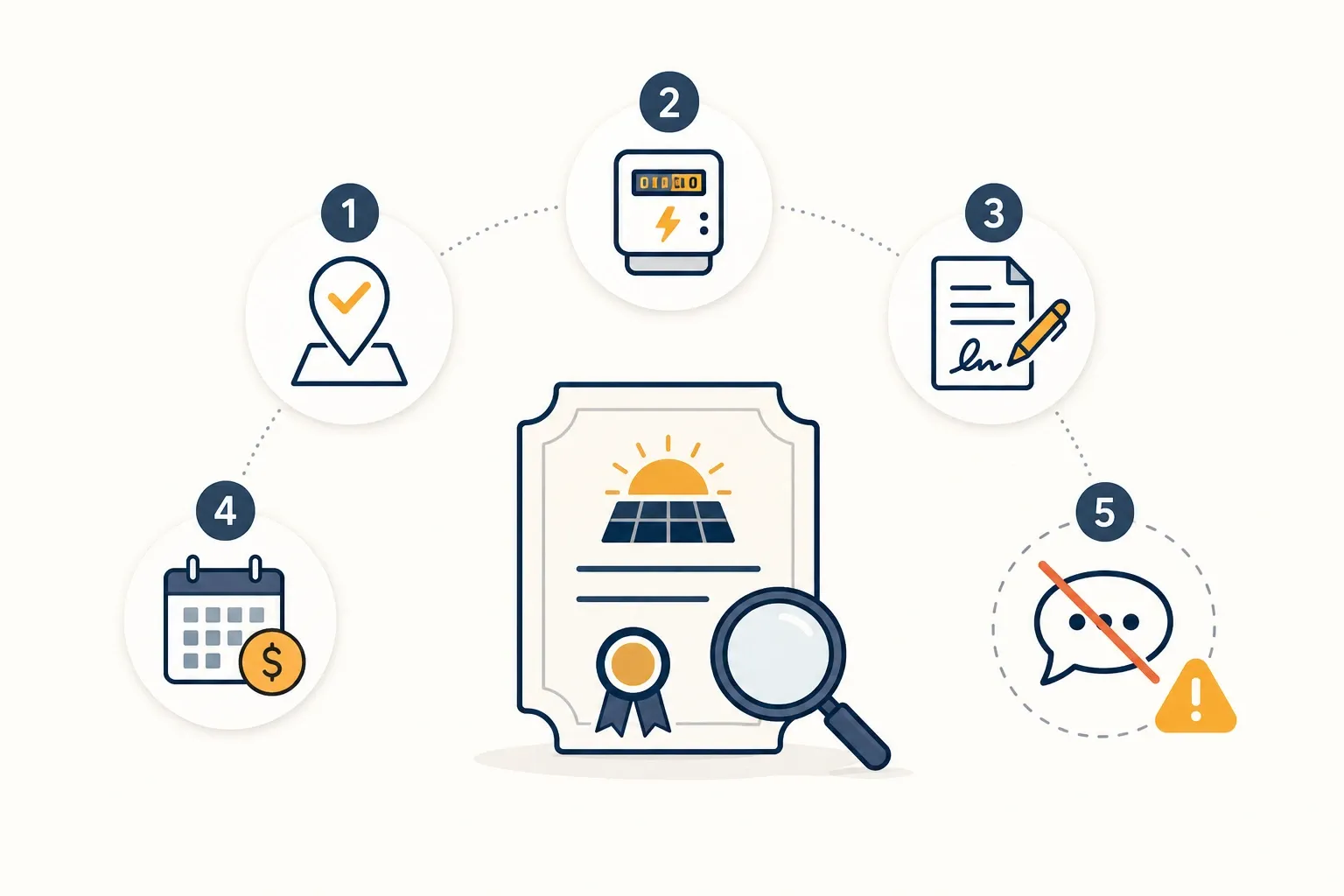
This page does not publish SREC prices, does not list SREC states, and does not estimate what your certificates would earn. Each of those would require a dated, state specific primary source, and publishing a stale one on a page about people's money is worse than sending you to the source. What it can tell you is what the instrument is, who tends to own it, and which five checks separate real income from a sales assumption. Where SRECs sit alongside everything else still available after the federal residential credit expired is covered in Solar Incentives in the US in 2026: What Actually Survived.
What is an SREC in simple terms? It is a certificate created for each megawatt hour of solar electricity your system generates, representing the environmental attributes of that generation rather than the power itself. Electricity suppliers buy them to meet state renewable requirements, and the EPA describes their value as set by supply and demand in each state market.
How many SRECs will my system produce? One SREC is created per megawatt hour generated, which is 1,000 kilowatt hours. How many that is per year depends entirely on your system's actual production, which is a function of your equipment, roof and location, so no article can tell you.
Does every state have SRECs? No. An SREC market generally exists only where a state's renewable portfolio standard contains a solar specific requirement that suppliers must meet. Check your state's current standard through the EPA's state RPS map or DSIRE rather than relying on a list.
If I sell my SRECs, can I still say my home runs on solar? No. The EPA states that homeowners who sell their SRECs preclude themselves from making solar power use claims or claims about reducing their carbon footprint. You keep the electricity and the bill savings, but the environmental claim transfers with the certificate.
Who owns the SRECs on a leased system? Usually the system owner, not the homeowner, but it is a contract term and it varies. Ask for the specific clause covering environmental attributes and renewable energy certificates in writing before signing anything.
One email a week with new guides, tips, and solar news. Zero fluff, no sales pitch.