Do I Need a Battery With Solar? The Real Trade-Off

Reviewed August 6, 2026. US residential solar market.
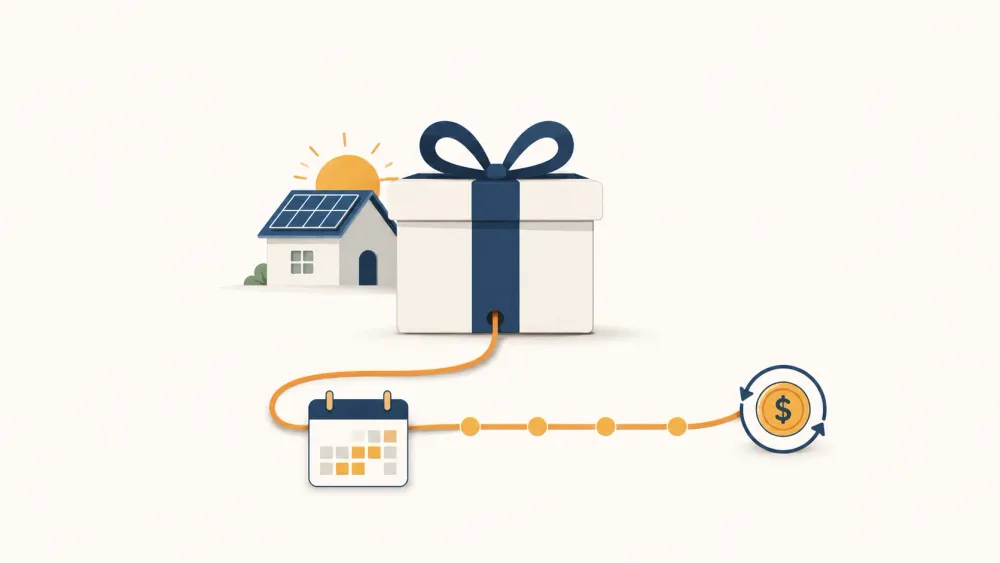
In the US, a "free solar panels" offer almost always describes a solar lease or a power purchase agreement (PPA), not a gift of equipment. A company installs, owns, and maintains the system on your roof at no upfront cost to you, and in return you pay that company, either a fixed monthly fee or a per-kilowatt-hour rate for the electricity it produces, for the length of the contract. You do not own the panels unless the contract includes a buyout option you exercise later.
That single fact, ownership versus no-cost installation, is the whole mechanism behind almost every "free solar" pitch, and it is also the catch: "free" describes the install, not the years of payments that follow. The rest of this article breaks down who owns what, what the payment actually replaces, and how to read an offer that uses the word "free" honestly.
The Department of Energy's Homeowner's Guide to Solar describes leases and PPAs as arrangements where a solar company, not the homeowner, owns the system that gets installed on the house. The company finances, installs, monitors, and maintains the equipment, and the homeowner hosts it on their roof for a contract term measured in years, not months.
Ownership is the detail that decides everything downstream. Because the company owns the system, the company is the one entitled to any incentive tied to ownership, not you. That includes the federal residential solar tax credit under Section 25D, which expired for homeowner-owned systems purchased with cash or a loan on December 31, 2025. A leasing or PPA company can, as the owner, still access a separate federal business tax credit on its own systems; whether and how much of that value gets passed through to you as a lower payment is set by the specific contract you sign, not by any rule that guarantees a pass-through. What Changed When the Federal Solar Tax Credit Expired covers that mechanism in full.
Reselling your home during the contract term does not automatically end it. Most agreements require you to either transfer the remaining contract to the home's buyer or pay to end it early. Neither option is "free" in the way the marketing headline implies, and both belong in your decision before you sign, not after.
With a cash or loan purchase, you are financing a fixed system price, and your goal is recovering that cost over time. A lease or PPA does not have a purchase price to recover, because you never buy anything. Instead, you take on a new, recurring obligation that sits alongside, and is meant to reduce, what you already pay your utility.
A solar lease charges a fixed monthly amount, calculated from the system's estimated production, regardless of how much electricity it actually generates in a given month. A PPA instead charges per kilowatt-hour of electricity the system actually produces, so the bill moves with production and weather. In either case, the electricity your system does not cover still comes from your utility at the utility's own rate, so most solar-lease or PPA households end up with two line items each month, not one, rather than a single bill that simply shrinks.
How much smaller your combined total is than your old bill depends on your usage, your utility's rates, your specific contract's pricing, and any scheduled increases in that pricing over the term, none of which a general article can respectably state as a number on your behalf. Solar Payback Period: How to Calculate Yours, Not the Average explains why a traditional payback calculation does not even apply to a lease or PPA the way it does to a purchase, since you never recover a cost you never paid.
"No money down" is a factually accurate description of a $0-down lease or PPA: you generally do not write a check at signing. The word "free," used to describe the same offer, stretches that same fact past what it can honestly support, because it implies no ongoing cost, and a lease or PPA is, by definition, a multi-year payment obligation.
The Federal Trade Commission has published consumer alerts specifically about solar marketing that promises panels "at no cost" or implies a government program is paying for the installation. The FTC's guidance is that homeowners should treat a claim of truly free equipment, with no ongoing payment of any kind, with skepticism, and verify exactly what is being described before agreeing to anything. That guidance describes a pattern in the marketing, not any single company or offer, and it applies equally to a legitimate lease or PPA pitch that gets over-simplified in an ad and to a pitch designed to mislead.
What the ad's headline typically leaves out: the length of the commitment, whether the payment can increase on a set schedule during that term, what happens at the end of the contract (renewal, removal, or a buyout at a price set in the contract), and who is responsible for maintenance and repairs if something goes wrong with a system you do not own.
No money down changes when you pay, not whether you pay. Signing a lease or PPA commits you to:
The Consumer Financial Protection Bureau's 2024 report on solar financing, which reviewed loans, leases, and PPAs across the industry, warned that third-party sales representatives can misrepresent projected savings and use high-pressure tactics, and recommended that homeowners get the exact terms in writing rather than relying on a verbal summary from a salesperson. That warning describes a pattern the CFPB found worth flagging publicly, not an accusation against any specific company or offer.
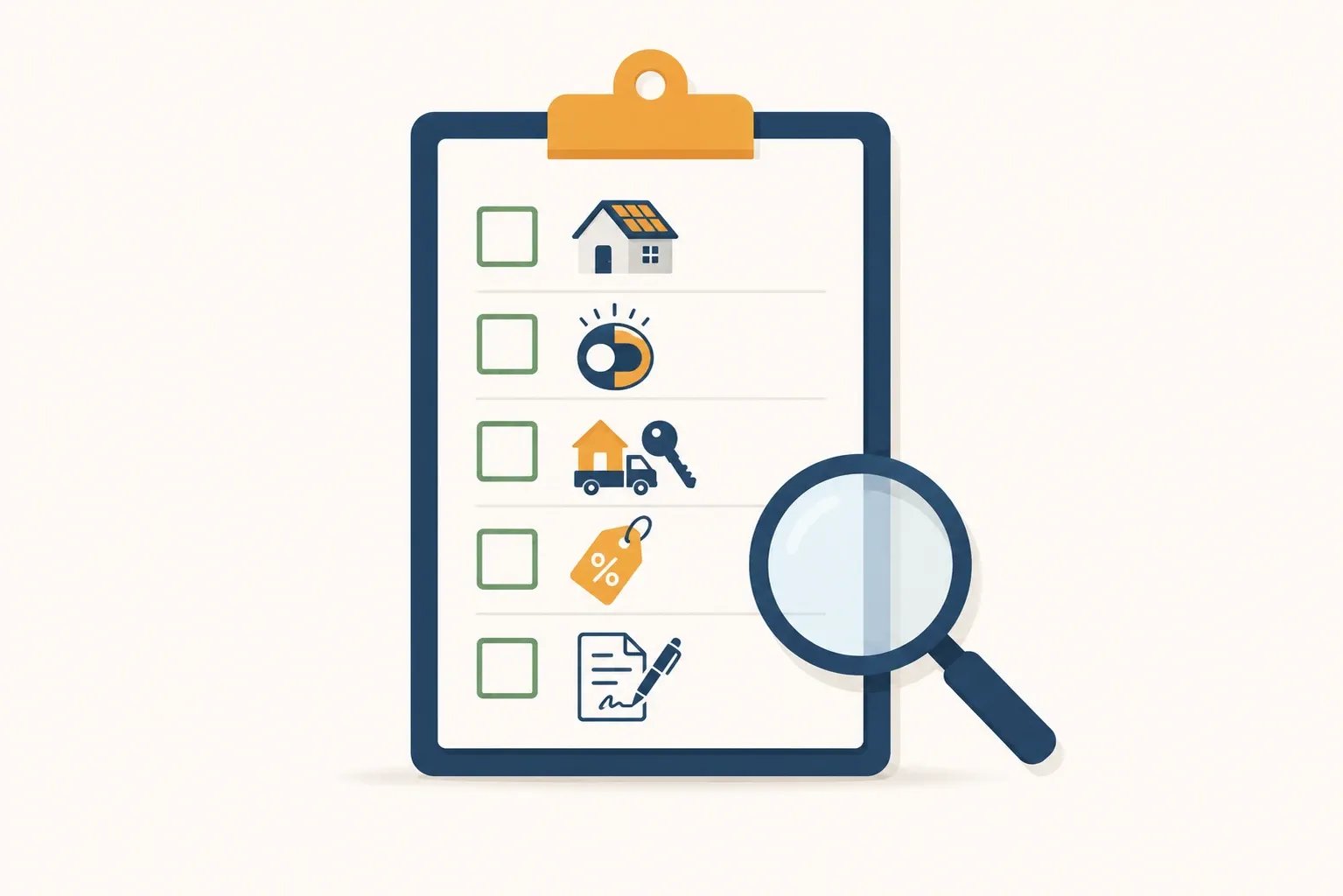
The offer itself is not the problem. Leases and PPAs are legitimate, common financing structures, used in a large share of US residential solar installations. The problem is a pitch that uses "free" to skip past the terms a reader would otherwise ask about. A short set of direct questions separates the two.
| Ask this | Why it matters |
|---|---|
| Who owns the system after I sign? | If the answer is the company, "free" refers to the installation cost, not the electricity or the equipment. |
| Is my payment fixed (lease) or based on production (PPA), and can it increase? | Determines what you can budget for, and whether the deal gets more expensive over time by design. |
| What happens if I sell my home during the contract? | A transfer or early-termination obligation should be disclosed before you sign, not discovered at closing. |
| Who is claiming any tax credit or incentive tied to this system? | If the company owns the system, the company qualifies for ownership-based incentives, not you, regardless of how the ad frames it. |
| What is my full cost over the entire term, in writing? | A verbal "you'll save money" claim is not a substitute for the contract's actual payment schedule. |
If a salesperson cannot answer these plainly, or the written contract does not match what was said out loud, that gap is worth taking to a second read before signing, and, if the terms still feel misrepresented after that, worth raising with the FTC, the CFPB, your state attorney general's consumer protection office, or your state's public utility commission. Cash, Loan, Lease or PPA: How to Pay for Solar in 2026 walks through all four financing structures side by side, Solar Lease vs. Buy in 2026 goes deeper on lease and PPA economics specifically, and What's Actually in a Solar Loan's Dealer Fee covers the same "read the actual terms" discipline for the loan side of the decision.
Are any solar panel offers actually free, with no payment at all? Essentially never for a residential offer advertised as "free solar panels." What is being described is almost always a lease or a PPA: no upfront cost to install, but a recurring payment for the length of the contract. A system with genuinely no cost to the homeowner at any point is not the product being sold in this kind of marketing.
What is the difference between a solar lease and a PPA? A lease charges a fixed monthly amount based on the system's estimated production. A PPA charges per kilowatt-hour of electricity the system actually produces, so the payment varies with output. Both are third-party ownership structures; the company owns the equipment in either case. The Department of Energy's Homeowner's Guide to Solar describes both structures in detail.
Do I get the federal solar tax credit if I get "free" solar panels through a lease or PPA? No. The Section 25D federal credit for homeowner-owned systems expired December 31, 2025, and even before that expiration, it applied only to owners, not to lease or PPA customers who never own the system. Any federal credit connected to a leased or PPA system belongs to the company that owns it. See What Changed When the Federal Solar Tax Credit Expired.
Can I buy the system later if I start with a lease or PPA? Only if the contract includes a buyout provision, and only at whatever price and schedule that provision specifies. This is a contract term to confirm before signing, not something to assume is standard.
What happens if I sell my house during a solar lease or PPA? Typically you must either transfer the remaining contract to the buyer, which requires the buyer's agreement and sometimes a credit check, or pay to end the contract early. Get this process explained in writing before you sign, since it affects a future sale, not just the years you plan to stay.
Who do I contact if a "free solar" offer seems misleading? The Federal Trade Commission and the Consumer Financial Protection Bureau both accept consumer complaints about solar marketing and financing, and your state attorney general's consumer protection office or state public utility commission are additional routes. None of these require you to already know whether a specific offer crossed a line; describing what you were told and what the contract actually says is enough to start.
One email a week with new guides, tips, and solar news. Zero fluff, no sales pitch.