Solar UCC Filings and Liens: What Gets Recorded, and Where

This page addresses contracts under United States law. Federal rules and one state example are named below; cancellation and lien rules differ by state, so confirm the current rule for your own state before acting.
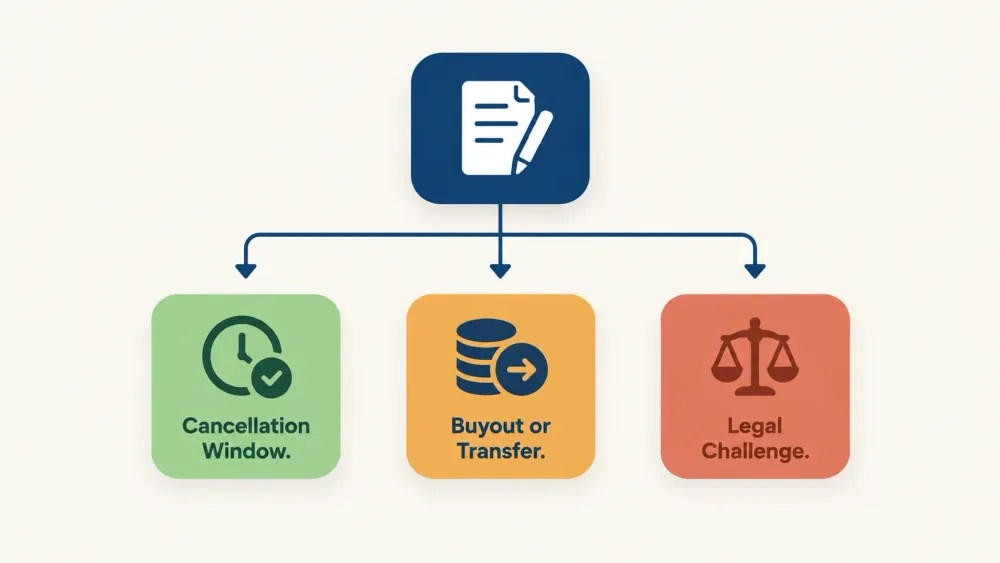
If you signed recently, your first move is checking whether you are still inside a legal cancellation window, since a home-solicited sale often carries one. If that window has closed, getting out of a solar contract usually means a buyout of the remaining balance, a transfer of the agreement to a new homeowner, or a legal challenge if the company misrepresented the system, the savings, or the financing. There is no single method that works for every contract. Which path applies depends on your state, the type of agreement you signed (loan, lease, or power purchase agreement), and whether the required cancellation notice was actually given to you in writing.
Federal law gives some protection to a contract signed at your home. As the Federal Trade Commission's Cooling-Off Rule states (read 2026-09-18), a seller must give a written notice of the right to cancel for many door-to-door and in-home sales, and the buyer generally has three business days to cancel in writing. Several states run their own home-solicitation or home-improvement statutes on top of the federal rule, and a state window can run longer, attach different conditions, or apply to a different set of sales. If the required cancellation notice was never given to you at all, the window some states use does not start running until it is.
None of this tells you your own deadline. State windows differ, they change, and they depend on facts specific to your transaction, including where you signed and who initiated the contact. Confirming the exact deadline and method that applies to your contract is a separate question from knowing that a window can exist, and it is worth doing before anything else, because a missed deadline closes the easiest exit on the list.
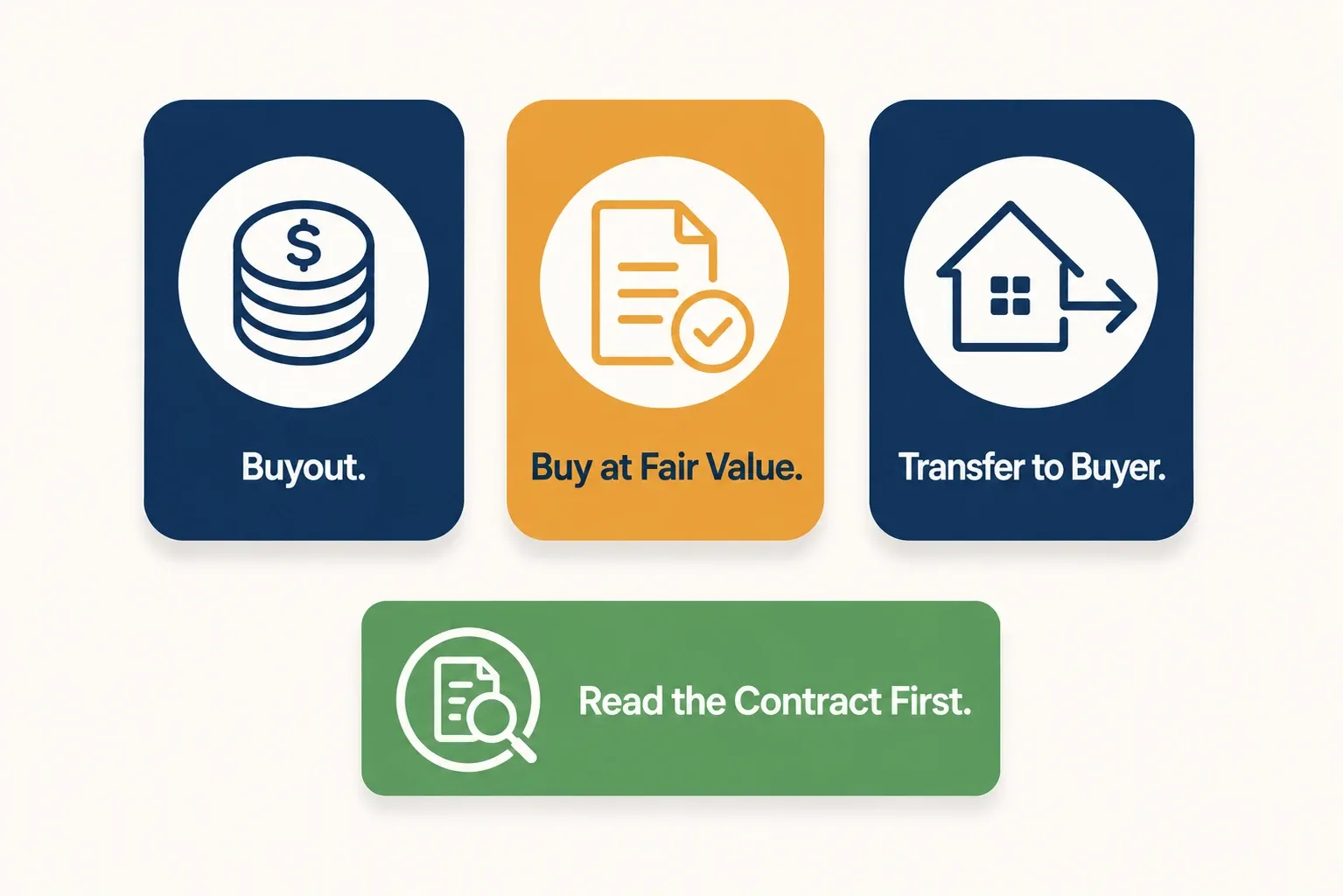
Once the statutory window closes, exiting a solar agreement is a negotiation or a legal question rather than a simple cancellation. The realistic paths are:
Calling the company to say you want out is a reasonable first step, but treat whatever buyout figure they quote as their opening number, calculated in their interest, not a neutral appraisal. Reviewing the contract's own early-termination and buyout language before that call gives you something to compare their number against. Walking away without a plan (stopping payments, ignoring notices) tends to make the financial and credit position worse rather than resolving it, so this is a case for reading the paperwork or getting advice before acting, not for avoiding the phone entirely.
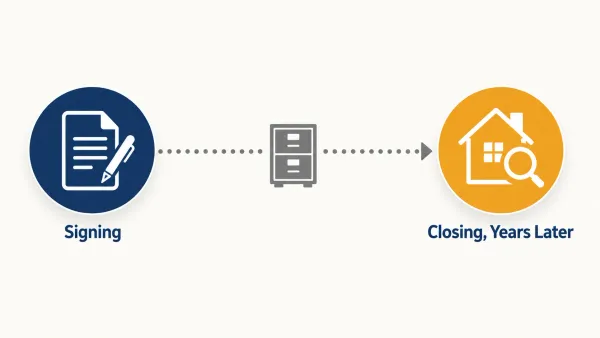
Many solar loans and some leases are secured by a filing against your home, most commonly a UCC-1 financing statement rather than a mortgage-style lien, though the practical effect at a home sale or refinance can feel similar: the filing has to be addressed before the transaction closes cleanly. What gets recorded against a property in a solar financing arrangement, and where to check for it, is worth confirming before you list a home or apply to refinance, not after a title company flags it. A filing does not necessarily block an exit from the contract, but it does mean the finance company has to release it as part of any buyout or transfer, which is one more reason to start that conversation early.
Some exit attempts are really disputes about what was sold, not just a wish to be released. If the system's actual production has fallen well short of what was represented, if required disclosures were missing, or if the contractor was not properly licensed in your state, you may have a stronger position than a simple cancellation request, and that is a question for a consumer protection attorney or your state attorney general's office rather than a call to the sales line.
One version of this shows up around battery backup. A system sold as whole-home backup is supposed to carry every circuit in the house through an outage; a system actually wired for partial backup only carries a limited panel of essential circuits chosen in advance, such as a refrigerator, some lighting, and a well pump. If those two were confused at the point of sale, an installer sizing a system larger than what a homeowner asked for is a related but separate problem worth understanding before that conversation. Whatever the sizing turns out to be, do not add circuits to a partial-backup panel yourself to make it behave like whole-home backup: a backup system built for essential loads only can be overloaded by circuits it was never sized to carry, and panel and backup-system sizing is electrical work performed by a licensed electrician, not a homeowner project, regardless of what the contract dispute concludes.
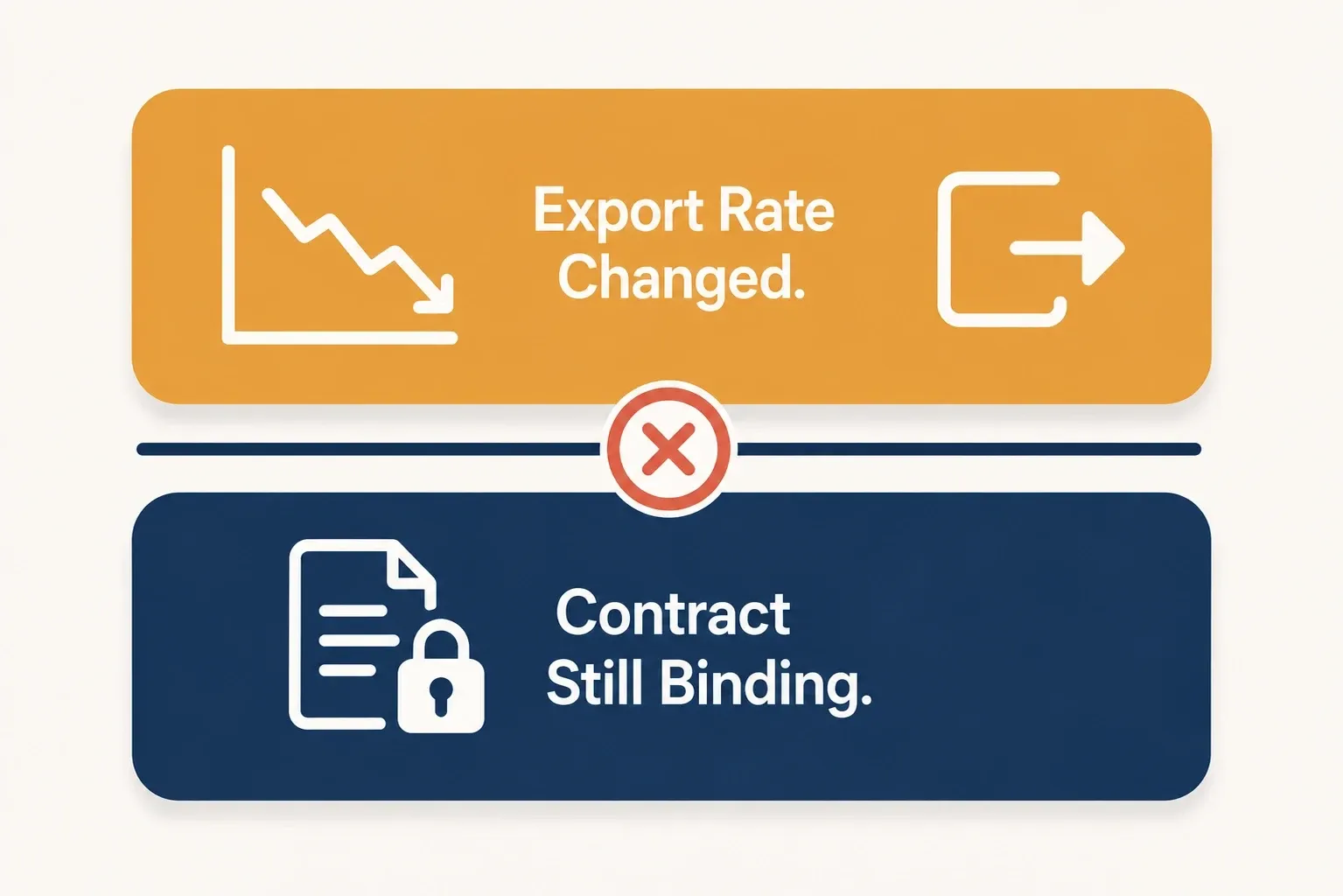
A separate reason people look for an exit is that the deal no longer pencils out the way it did on the sales visit, often because of a change in how the utility compensates exported solar power. Export compensation, commonly called net metering or net billing, is set state by state and utility by utility, and it changes. California's transition away from its prior full-retail net metering credit is one documented example: the California Public Utilities Commission's Net Billing Tariff decision (read 2026-09-18) restructured export credits for customers who applied for interconnection after April 2023, and other states have revised their own rules on their own timelines. A rate change like this affects how long a system takes to pay for itself. It does not, on its own, void the underlying contract or create a cancellation right, which is a separate legal question from the economics. Confirm current export rules with your own utility or state public utilities commission rather than assuming last year's rate still applies.
A short list to work through first: gather every document you signed, including anything signed on a tablet, since a full paper trail is what a state office or an attorney will ask for first. Note the date you signed and the date, if any, you received a written cancellation notice. Separate the installation contract from any loan, lease, or PPA, since these are frequently different agreements with different companies and different exit terms, even when they were presented as one deal. And before assuming a buyout is your only option, ask directly what happens to the financing if the installation contract itself is cancelled or disputed, since the answer is not always "it goes away too." Recognizing the sales pressure that leads to a contract someone later regrets is the version of this article most people wish they had read earlier, and it is worth reading regardless of where you are in the process now.
How many days do I have to cancel a solar contract? It depends on your state and on whether the required written cancellation notice was actually given to you. Federal rules provide a baseline of three business days for many sales made at your home, and some states run longer or additional windows under their own home-solicitation or home-improvement statutes. Confirm the exact deadline and method for your specific contract and state with your state attorney general's office or consumer protection division rather than relying on a general number.
Can I get out of a solar contract by just telling the salesperson I changed my mind? Usually not. A statutory cancellation right typically requires written notice sent by a specific method to a specific address within the deadline, not a verbal statement to the person who sold you the system. If your contract came with a cancellation notice form, that form generally states the correct method.
Does selling my house end my solar lease or loan? Not automatically. A lease or power purchase agreement payment obligation typically continues after a sale unless the finance company agrees to let the buyer assume it, which is their decision to make, not an automatic transfer. A solar loan may also carry a filing against the property that needs to be addressed at closing. Contact the finance company early in the sale process, not after an offer is already on the table.
What if the company misrepresented my savings or my system's capacity? That can be legal grounds for cancellation or a claim beyond the standard statutory window, particularly if required disclosures were missing or the contractor was not properly licensed. This is a matter for a consumer protection attorney or your state attorney general's office to assess against your specific contract and your state's law, not something a general guide can determine for you.
Check first whether you are still inside a statutory cancellation window, since that is the cleanest way out and it is time-limited. If that window has passed, the realistic paths are a buyout, a fair-market purchase, or a transfer to a new owner, and each depends on the type of agreement and your state. Watch for liens or UCC filings before a home sale or refinance, and treat a company's own buyout quote as their opening number rather than a neutral figure. If the system itself was misrepresented, including its backup capacity, that is a legal question for an attorney or your state attorney general's office. And a change in your utility's export rate affects the economics of keeping the system, not your legal right to exit the contract, so confirm current rules with your own utility before assuming either way.
One email a week with new guides, tips, and solar news. Zero fluff, no sales pitch.