Do I Need a Battery With Solar? The Real Trade-Off

United States only. This page names no company, ranks nobody, quotes no figure and contains no price. It is about how a sale is being run, not about whether solar is a good idea.
Every red flag below is about the process rather than the product. That is what makes them useful: you can recognize all of them without knowing anything about panels, inverters or tariffs, and they work whether the company in front of you is excellent or dreadful.
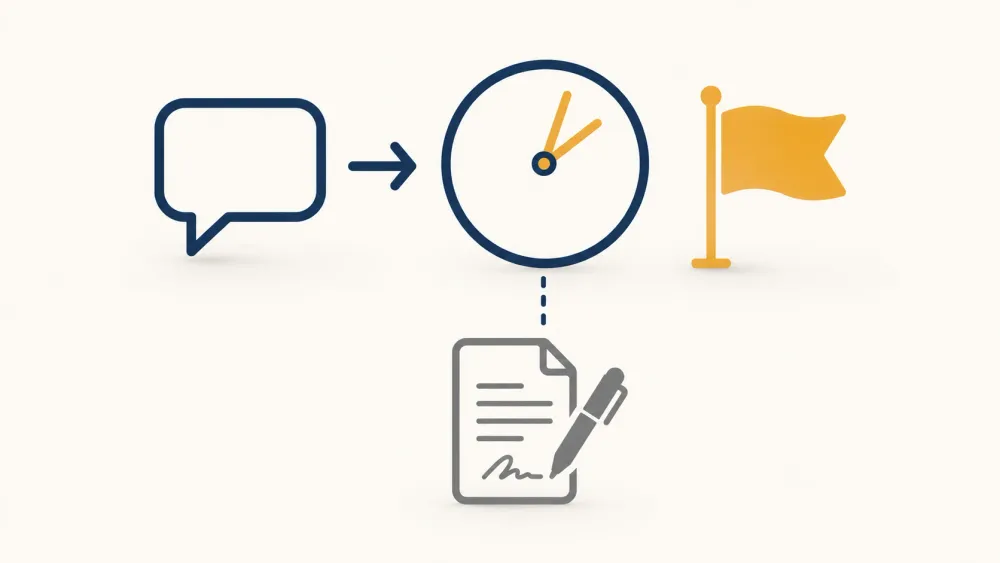
And most of them are not evidence of a bad person. They are evidence of a compensation structure. A salesperson paid on signed contracts, today, has a structural reason to compress your decision, and the flags below are what that pressure looks like from your side of the table.
The single most reliable flag in the entire category.
A solar installation is a construction project on your roof financed over many years. Nothing about it makes a genuine price expire at the end of a conversation.
A discount that disappears when the salesperson leaves is not a discount. It is a device for removing the part of your decision that happens after they go, which is the part where you compare, read and think.
Correct response: "Then I will decline, because I do not sign anything the same day." A real company will still be there next week with a real price.
A loan has a total cost, an interest rate, a term and often fees. A monthly payment is one output of those four, and it can be made to look small by changing any of them.
If somebody keeps returning to a monthly number and away from the total financed amount and the rate, that is the flag. What a solar loan dealer fee is and how it changes the real price is the specific mechanism that makes a low advertised rate cost more than a higher one.
Ask for the total amount financed, the APR, the term and every fee, in writing, before anything else.
Related and worth its own line. If a company will not tell you what the system costs to buy outright, you cannot evaluate the financing at all, because you cannot see what the financing is costing you.
Ask for both numbers on the same page.
A verbal quote is not a quote. A proposal you are shown on a tablet and not given is not a proposal.
"Send me the full proposal as a PDF and I will read it" is a complete and sufficient response to any solar salesperson, and how they react to it tells you a great deal.
Sometimes stated directly, more often as a reason the other companies are not comparable.
Three quotes is the standard advice for a reason, and how to read three proposals side by side is the skill that makes them useful rather than confusing.
A proposal contains an estimate of how much electricity the system will produce. That estimate is the foundation of every savings figure downstream.
If the proposal does not show the assumptions behind it, the savings numbers are unfalsifiable. What makes a production estimate realistic, and the inputs to check sets out what a proper one contains.
Future savings depend on future electricity rates, future consumption and future tariff rules, none of which anybody knows.
A proposal presenting decades of savings as a single confident number, without stating what it assumed about rate escalation, is presenting a projection as a fact.
Ask what rate escalation was assumed. It is a real input, it is in the software, and the answer tells you whether the number is conservative or flattering.
Your utility's rules about what you are paid for exported electricity are the other half of every savings calculation, and they change.
A salesperson who cannot tell you which tariff you would be on, and what is scheduled to happen to it, is selling on numbers they cannot support. What net metering is and why the version matters so much is the background, and the specifics are your utility's to state.
A credit pull is a real event with a real consequence, and it belongs after you have decided you want to proceed with a company, not before you have seen their numbers.
Anything that produces a signature or a credit check early in the process is designed to make leaving harder.
Incentive programs exist and some do have caps and deadlines. What does not exist is a program that selects your house, or a representative of one who arrives unannounced.
Anyone implying they represent a government body, a utility, or an official program is making a claim you can verify in ninety seconds by calling the body they named. Do that, using a number you look up yourself rather than one they give you.
Payment schedules vary and deposits are normal. A large sum before permits, before design and before equipment arrives is not. Some states regulate what may be collected up front for home improvement work, and your state licensing board can tell you.
Worth saying, because they are the ones that let the other eleven work.
You are being asked to decide in a setting you did not choose. Your own doorstep, your own kitchen table, at a time somebody else picked, with a person you did not invite. That is a bad decision environment regardless of who is in it.
You are being asked to decide about something you have not researched. The remedy for both is the same and it is free: end the meeting, take the paperwork, and read it alone with nobody waiting.
You do not have to challenge anything, catch anyone out, or be rude. Three sentences do the whole job.
"Send me the complete written proposal, including the cash price, the total financed amount, the APR, the term and all fees."
"I do not sign anything on the day."
"I will get two more quotes and then decide."
A company that is fine with all three is a company you can evaluate on its numbers. A company that is not has answered your question.
Four places, all free, all specific to you.
Your state's contractor licensing board. Whether the company is licensed for this work, and whether there are complaints or actions against it. Licensing requirements for solar work are state level.
Your state attorney general or consumer protection office. Where door-to-door and home-improvement sales rules live, including any right to cancel and the notice that must accompany it.
Your utility. Which tariff you would be on, what the interconnection process involves, and whether the company is on any list the utility maintains.
Your local building department. Whether permits are required and whether this company pulls them.
None of that requires you to understand solar. It requires a phone.
Does a red flag mean the salesperson is dishonest? Usually not. Most of the flags on this page are evidence of a compensation structure rather than of a bad person. A representative paid on contracts signed today has a structural reason to compress your decision into the visit, and that pressure looks the same whether the company behind it is excellent or dreadful. You are reacting to the process, not accusing anyone.
What if the discount really does expire today? Then decline it. A solar installation is a construction project on your roof financed over many years, and nothing about it makes a genuine price expire at the end of a conversation. A discount that disappears when the salesperson leaves removes the part of your decision that happens after they go, which is the part where you compare, read and think. A real company will still be there next week with a real price.
How many quotes should I get before deciding? Three is the standard advice, and the reason is that one proposal gives you nothing to measure against. Ask each company for the complete written proposal, including the cash price, the total amount financed, the APR, the term and every fee, then read the three side by side with nobody waiting on an answer.
Someone said I was selected for a government solar program. How do I check? Call the body they named, using a number you look up yourself rather than one they give you. Incentive programs exist and some do have caps and deadlines, but no program selects your house or sends a representative to it unannounced. Anyone implying they represent a government body or a utility is making a claim you can verify in about ninety seconds.
Is it normal to pay money before anything is installed? Payment schedules vary and deposits are normal. A large sum before permits, before design and before equipment arrives is not. Some states regulate what may be collected up front for home improvement work, and your state contractor licensing board is the place to ask what applies where you live.
Every flag here is about process: a price that expires, a monthly payment substituting for a total, no written proposal, discouragement from comparing, production and savings numbers with no stated assumptions, an early credit pull, an invented program, and money up front. End the meeting, take the paperwork, get two more quotes, and check the company with your state licensing board and your attorney general's office before anything is signed. Nothing good in this industry requires you to decide tonight.
One email a week with new guides, tips, and solar news. Zero fluff, no sales pitch.