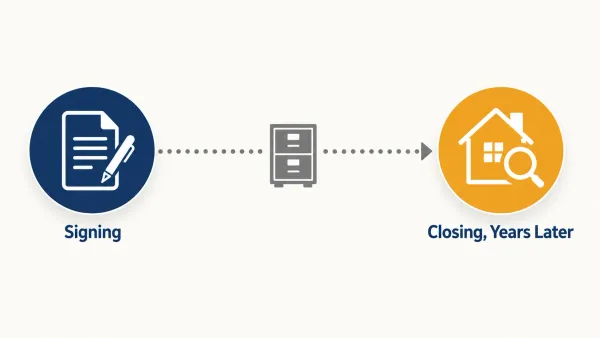
Solar UCC Filings and Liens: What Gets Recorded, and Where

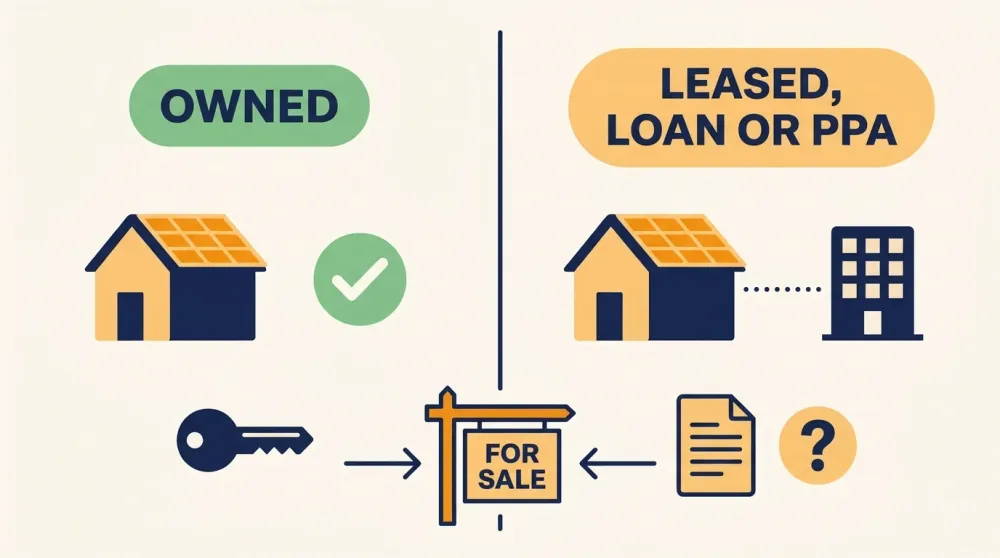
Selling a house with solar panels in the United States is straightforward when you own the system outright and more involved when you do not. An owned, paid-off array is treated as part of the property and transfers at closing with the house. A system still carrying a loan, a lease, or a power purchase agreement brings a third party into your sale: the balance may have to be cleared, a filing against the property may have to be dealt with, and the buyer may have to qualify to take the contract over. Ownership type decides nearly everything that follows.
United States only, and general information rather than legal, tax, or real estate advice. Reviewed November 2026. Contract terms, recording practice, and lender requirements vary by company, by state, and by loan program, so your own documents, your title company, and your agent are the authorities for your sale.
"Owned versus leased" is the usual framing and it hides a step. There are four common positions, and the paperwork differs for each.
| Your position | Who owns the system | What the sale has to deal with |
|---|---|---|
| Bought with cash, or a loan already repaid | You | Normally nothing beyond transferring warranties and documents |
| Financed with a balance outstanding | You, subject to the lender's security interest | Paying off or otherwise resolving the balance, and any filing recorded against the property |
| Leased | The solar company | Transferring the agreement to the buyer, or buying it out before closing |
| Power purchase agreement | The solar company | The same two routes, with the payment based on energy delivered rather than a fixed rent |
The Federal Trade Commission's guidance on solar power for your home tells buyers to confirm before signing whether they can "transfer the contract to the buyer," along with "any associated costs or credit requirements the buyer must satisfy." If you are reading this while already selling, that clause in your own contract is the first thing to find.
Here is the part most selling guides skip. In a financed sale, the person who decides how your solar arrangement is handled is not your buyer and not your agent. It is your buyer's mortgage lender, applying rules written by the entity that will buy the loan.
Fannie Mae's Selling Guide sets out requirements for properties with solar panels that are worth knowing in advance, because they explain why a lender asks for things that feel irrelevant.
Those requirements are published in Fannie Mae's Selling Guide section on special property eligibility. Other loan programs have their own rules, and a cash buyer has none of them, which is one reason some sellers with complicated systems end up with cash offers.
This is the simple case. The array is a fixture of the house, it conveys with the property, and there is no third party to satisfy. Your work is documentary: assemble the warranty paperwork, the commissioning date, the permit and interconnection records, and the production history, and hand them over.
Two details are still worth attention. Manufacturer warranties commonly transfer to a new owner while installer workmanship warranties vary, so find the transfer clause rather than assume. And the buyer will inherit your interconnection arrangement with the utility, which usually requires the new owner to file their own paperwork with the utility after closing. Confirm what your utility requires, because the credit arrangement is between the utility and the account holder.
A solar loan is a debt in your name, and it does not follow the house by itself. In practice sellers either pay it off from the proceeds at closing, which is the common route, or negotiate something else with the buyer and both lenders, which is slower and often fails.
What catches people out is the recorded filing. Many solar loans are secured by a UCC-1 fixture filing against the property, which surfaces during the title search rather than at the moment you decide to sell. It is not a mortgage and it is not nothing, and it has to be addressed before title can close cleanly. We cover what the instrument is and where it is recorded in solar UCC filings and liens. The practical move is to ask your lender for a payoff quote and your title company for a search early, in the week you decide to list rather than in the week you expect to close.
You do not own the equipment, so you cannot sell it. Two routes exist and your contract decides which are open to you.
Transfer the agreement to the buyer. The solar company sets the terms: the buyer typically has to apply, meet a credit standard, and sign an assumption. That adds a party, a timetable, and a point of failure to your escrow, and it narrows your buyer pool to people willing to take on a monthly obligation. Start it early. The company's transfer department, not your agent, controls how long it takes.
Buy the agreement out before closing. This removes the complication and converts the sale into the owned case, at a cost set by the contract's buyout schedule rather than by what the equipment is worth. Ask for a current buyout figure in writing and read the clause that produces it.
Either way, the buyer will read the escalator, which is the clause that raises the payment over the term, and a payment that rises faster than local electricity rates is the detail that most often loses a deal. Our explainer on the PPA escalator clause sets out how it works, and if you are weighing whether to exit altogether, getting out of a solar contract covers the realistic options.
Have these in one folder on day one, because every delay in this category comes from hunting for paperwork mid escrow.
The Department of Energy's homeowner's guide to going solar states that buying a system "will likely increase your home's value," that there is "evidence homes with solar panels sell faster than those without," and that third-party owned systems "add some complexity to the real estate transaction" while being mostly neutral in their effect. It points to the PV Value tool for valuing a specific system in a specific sale.
Two cautions belong beside that. The research behind home value premiums looks at owned systems, so it is not a statement about what a lease does for your sale. And an appraiser can only credit what the paperwork supports, which is why the Fannie Mae rule above matters: a financed array with no fixture filing may receive no contributory value at all. We look at what the evidence does and does not establish in do solar panels increase home value, and the underlying purchase decision is covered in solar lease versus buy.
Can I take the panels with me? Rarely worth it, and rarely allowed. Removal and reinstallation is a full project with roof work at both ends, your sale contract would have to exclude the system explicitly, and a lease or PPA will have its own relocation terms. The FTC suggests settling the question of moving the system when you sign, not when you move.
Will solar scare off buyers? Owned systems are generally an asset in a listing. The friction concentrates in leases, PPAs, and loans with a balance, because those ask the buyer to take on an obligation or ask the sale to clear a filing. Having the documents ready removes most of that friction.
Does the tax credit affect my sale? A federal credit claimed on a purchase belongs to the year it was claimed and is not something that transfers with the house. Anything about your own tax position is a question for your tax preparer, not for your agent or your installer.
Who tells the utility about the change of owner? Usually the new owner, after closing, by setting up their own account and interconnection paperwork. Rules differ by utility, and net metering arrangements in some states are tied to the account holder rather than to the address, so the buyer should confirm what they are inheriting before closing rather than after.
Should I buy out the lease before listing? That is a numbers question only you can answer, and the inputs are the written buyout figure, how your local market is behaving, and how much transfer risk you are willing to carry in escrow. Get the figure in writing first, then discuss it with your agent.
One email a week with new guides, tips, and solar news. Zero fluff, no sales pitch.