Do I Need a Battery With Solar? The Real Trade-Off

United States only. Statutes read on August 23 and 24, 2026. Tax law changes by legislative session, so treat every date below as the day we checked, not as a permanent state of affairs.
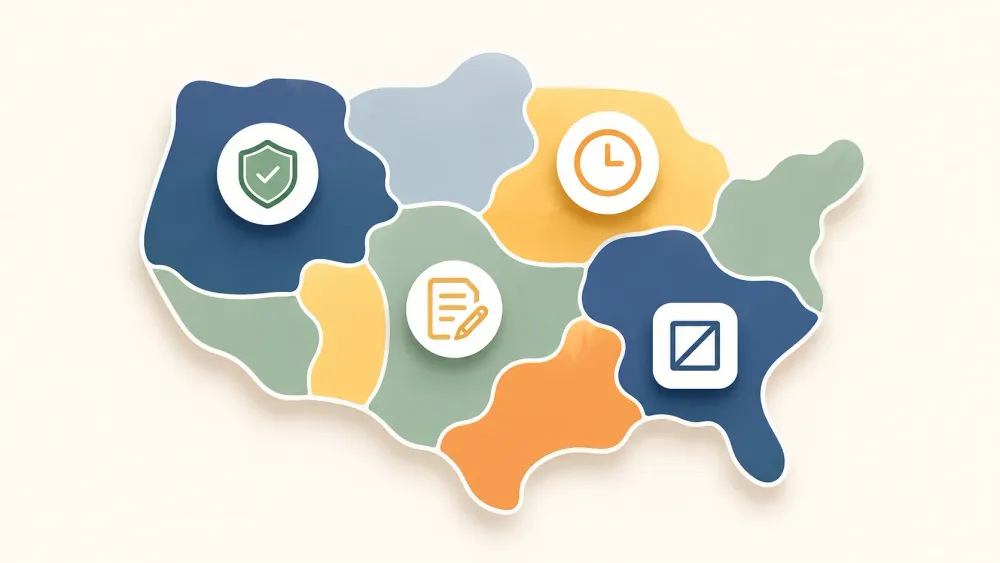
Most states relieve residential solar from some property tax, sales tax, or both, but the relief is written into each state's own statute and the shapes are genuinely different. Some states exclude the added value from assessment permanently, some for a fixed number of years, some only if you file an application, and some let a city or county opt out of the whole thing. The question "does my state have a solar property tax exemption" almost never has a clean yes or no answer, and this page is about how to get your real one rather than about a table you cannot verify.
This is general information, not tax advice. Property and sales tax outcomes depend on your parcel, your local jurisdiction and the year you install. Confirm with your county assessor or appraisal district and your state revenue department before you rely on anything here.
Every state list on the internet answers the same shallow question. These four are the ones that change what actually happens to your bill.
1. Is it an exemption, or an exclusion from assessment? These sound the same and are not. An exemption removes value that has been assessed. An exclusion means the improvement is not treated as new construction in the first place, so the added value never enters the roll. California uses the second structure, which is why its rule reads oddly if you expect the first.
2. Is it permanent, or does it run out? New York's runs for a fixed term. California's now depends on whether you installed before a specific date. A state that appears on a national list as "has an exemption" may be a state where your exemption ends in year sixteen.
3. Is it automatic, or must you apply? Some states apply the relief when the assessor values the property. Others require you to file a form with your county, and missing the filing means paying tax you did not have to pay. This is the single most expensive detail on this page.
4. Can a local government opt out, or is part of the tax outside the state's reach? New York allows local opt-outs on the property tax side and treats the local portion of sales tax separately. A statewide statute can therefore produce a different answer in the next town over.
California's rule sits in Revenue and Taxation Code section 73. Read on the Legislature's own site on August 24, 2026, it provides that the term "newly constructed" "does not include the construction or addition of any active solar energy system," and states that "This section applies to property tax lien dates for the 1999-2000 fiscal year to the 2025-26 fiscal year, inclusive," and that "this section shall remain in effect only until January 1, 2027."
That sunset was addressed by Senate Bill 710, which the Legislature's own bill record shows as approved by the Governor on October 3, 2025 and chaptered as Chapter 328, Statutes of 2025. Here is where the reporting and the statute part company, and it is worth being precise, because a good deal of coverage described SB 710 as eliminating the 2027 sunset.
The chaptered text does not eliminate the date. The Legislative Counsel's Digest describes the change as making "the repeal date of January 1, 2027, the date the exclusion becomes inoperative," and the operative language provides that "active energy solar systems that qualify for an exclusion under this section prior to January 1, 2027, shall continue to be excluded on and after January 1, 2027, until there is a subsequent change in ownership."
Read plainly, and confirmed against the chaptered text on August 24, 2026, that means three things. A system that qualifies before January 1, 2027 keeps its exclusion past that date. The exclusion it keeps ends at a subsequent change in ownership. And the date itself still stands for anything that does not qualify before it, absent further legislation. If you are a California homeowner weighing timing, that is the structure to take to your county assessor, and it is a question about your parcel that only the assessor can answer.
New York's property tax rule is Real Property Tax Law section 487. Read on the New York State Senate's site on August 24, 2026, it exempts qualifying property from taxation "to the extent of any increase in the value thereof" attributable to the qualifying system "for a period of fifteen years." Qualifying systems include solar and wind, and the section covers a wider list including energy storage. The statute ties eligibility to systems constructed after January 1, 2018 and before January 1, 2030, with earlier dates applying to some categories.
The provision that catches people is local: "A county, city, town or village may by local law ... provide ... that no exemption under this section shall be applicable within its jurisdiction." A statewide exemption that your town has opted out of is not an exemption for you. Ask your assessor whether your jurisdiction has adopted an opt-out, and ask before you sign, not after.
New York also runs a sales tax exemption, and it has the same local structure. The New York State Department of Taxation and Finance bulletin on residential solar energy systems equipment, read on August 24, 2026, states that qualifying equipment and installation are exempt from "the 4% New York State sales and use tax, and the 3/8% sales and use tax imposed in the Metropolitan Commuter Transportation District (MCTD)," and that the equipment "may also be exempt from local sales tax, depending on the taxing jurisdiction." The department publishes Publication 718-S listing which local jurisdictions have enacted the exemption. That publication, not a national article, is the answer for a New York buyer.
Texas relieves the added value through Tax Code section 11.27. The Texas Legislature's own statutes server returned only its site navigation when we tried it on August 24, 2026, so we read the section in a published copy of the statute text on the same day rather than on the state's own site, and we are saying so rather than pretending otherwise. That text provides that a person "is entitled to an exemption from taxation of the amount of appraised value of real property owned by the person that arises from the installation or construction on the property of a solar or wind-powered energy device that is primarily for production and distribution of energy for on-site use," with a broad statutory definition of a solar energy device.
The structural point for a homeowner is that Texas exemptions of this kind are claimed, not granted automatically. The Texas Comptroller publishes an application form for the solar or wind-powered energy device exemption, filed with your county appraisal district. We located that form by name and number but did not read a current copy in this session, so confirm the current form, the filing window and the documentation required directly with your county appraisal district. An exemption you were entitled to and did not claim is money paid for no reason, and no article can file the form on your behalf.
Florida's rule sits in Florida Statutes section 193.624. The Florida Senate's statute server refused our connection on both attempts, on August 23 and again on August 24, 2026, so we did not read the current official text, and we are therefore not restating its percentages here. If you are in Florida, read section 193.624 on the Legislature's own site or ask your county property appraiser, and treat any percentage you see quoted in a blog as unverified until you have.
We also did not publish a count of how many states have a property tax exemption or a sales tax exemption. Counts of that kind circulate widely and change with each legislative session, and a number without a named source and a read date is exactly the kind of figure this site does not print. The Database of State Incentives for Renewables and Efficiency (DSIRE), run by the N.C. Clean Energy Technology Center, maintains program-level entries by state with dates attached, and it is the right place to start a lookup for a state not covered above. Verify whatever you find there against the statute or the revenue department page it cites, because DSIRE is a summary and the statute is the law.
A tax exemption is not a rebate and it is not a credit, and treating the three as interchangeable is how proposals get padded. An exemption changes what you are taxed on. It does not put money in your account, and it does not appear on your installer's price. What stacking state solar rebates actually means covers the four mechanisms and which of them are real money, and what actually survived in US solar incentives in 2026 is the wider picture after the federal residential credit lapsed.
Two related questions get conflated with this one often enough to be worth separating. Whether a solar system raises your property's market value is a different question from whether it raises your assessment, and it is covered in whether solar panels increase home value. And what your utility charges you to connect, which is not a tax at all, is covered in utility interconnection fees and solar-specific charges.
Does a solar property tax exemption mean my property tax goes down? No. In most states it means the added value of the system is not counted when your property is assessed, so your tax does not go up because of the system. That is a different outcome from a reduction, and it is worth saying out loud before you plan around it.
Do I have to apply for it? In some states, yes. Texas Tax Code section 11.27 relief is claimed by application filed with the county appraisal district. Other states apply it at assessment. Ask your assessor or appraisal district which applies to you, and ask what the deadline is.
Can my city cancel a statewide exemption? In New York, yes. Real Property Tax Law section 487 allows a county, city, town or village to provide by local law that no exemption under the section applies in its jurisdiction. Whether your state allows the same thing is a question for your state statute.
Is there a national list I can trust? DSIRE, run by the N.C. Clean Energy Technology Center, is the standard reference and carries dates on its entries. Treat it as a lookup that points you at the statute, not as the final word, and confirm anything you plan to act on with the state revenue department or your county.
Is a sales tax exemption automatic on the whole purchase price? Not necessarily. New York exempts the state rate and the MCTD rate on qualifying residential solar equipment and installation, while local sales tax exemption depends on the jurisdiction, with the department publishing the local rates separately. Other states draw the line in other places, including around whether installation labor is covered.
One email a week with new guides, tips, and solar news. Zero fluff, no sales pitch.