How Long Does a Home Battery Last? Outage Math Explained

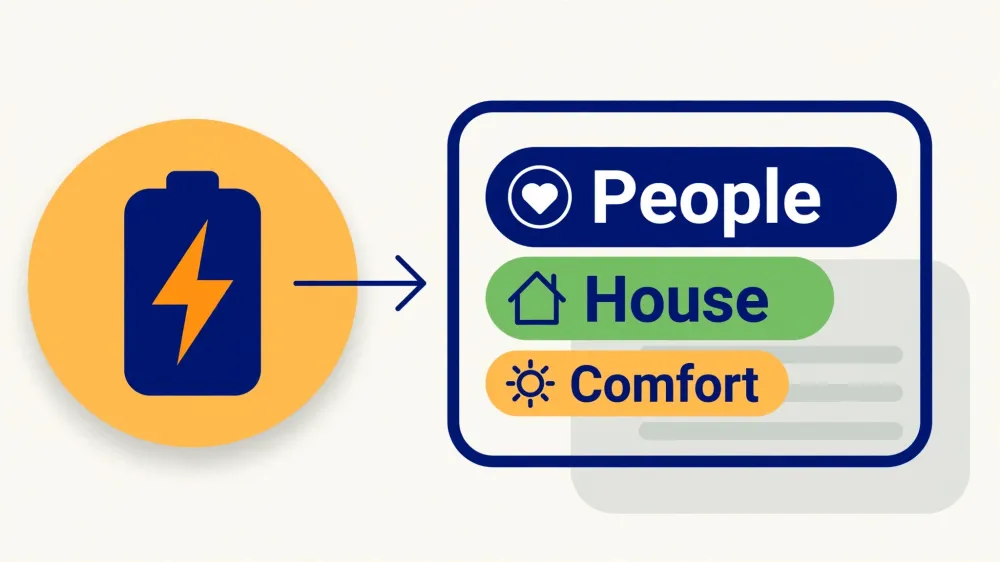
An essential loads panel is a separate breaker panel that a home battery keeps powered when the grid goes down, while everything left in the main panel goes dark. Choosing what goes into it is a ranking exercise: first the loads that protect people, then the loads that protect the house, then comfort. You decide the priorities. A licensed electrician decides which circuits actually fit the battery, and sizes and wires the panel. Ask for that list in writing before you sign, because moving circuits later costs money.
This page covers US grid-tied homes with a battery quoted as part of a solar purchase or added on its own. It explains how to think about the list, not how to build it: nothing here is wiring guidance, and nothing inside a breaker panel is homeowner work.
The reason is arithmetic. EnergySage's guide to critical load panels (updated March 6, 2026, read September 25, 2026) puts average US home use at about 30 kWh a day and says most home batteries store somewhere between 10 and 20 kWh of usable capacity. One battery, in other words, usually holds less than one average day of whole-house use.
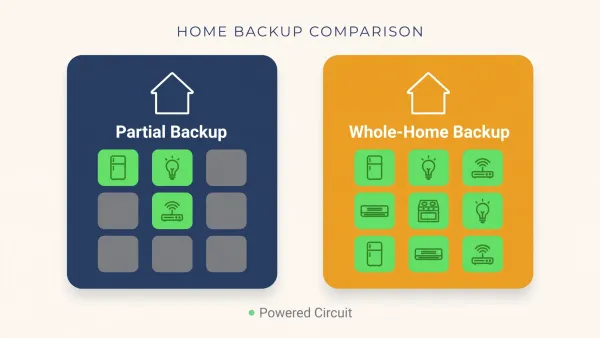
An essential loads panel, also called a critical loads panel or backup loads panel, solves that by shrinking the house. During an outage, equipment in the backup system disconnects your home from the grid and sends battery power only to the circuits that were moved into the backup panel. The rest stay off until the utility restores service.
That trade is the whole design. A smaller backed-up house makes a modest battery last longer and keeps the system's power limit out of reach of the biggest appliances. The cost is that you are choosing, in advance and usually at install time, which parts of your home simply stop working in a blackout.
This is the point most checklists skip, and it is where lists go wrong. An electrician does not move "the refrigerator" into an essential loads panel. They move the breaker, and with it everything that breaker feeds.
In many homes one 120-volt circuit powers several rooms' worth of outlets and lights. The kitchen refrigerator may share a circuit with the countertop outlets where someone plugs in a space heater or a toaster in an outage. A bedroom circuit you picked for a phone charger may also carry a window air conditioner. Once that circuit is in the backup panel, everything on it can draw from the battery.
So the useful question is not "which appliances matter?" but "which circuits carry the things that matter, and what else is on them?" You can start answering that yourself without touching anything electrical: read the handwritten directory on the inside of your panel door, and note which rooms go dark when a known breaker trips. Treat the directory as a guess, not a record. Labels are often years out of date. Confirming what each circuit actually feeds is part of the electrician's site survey.
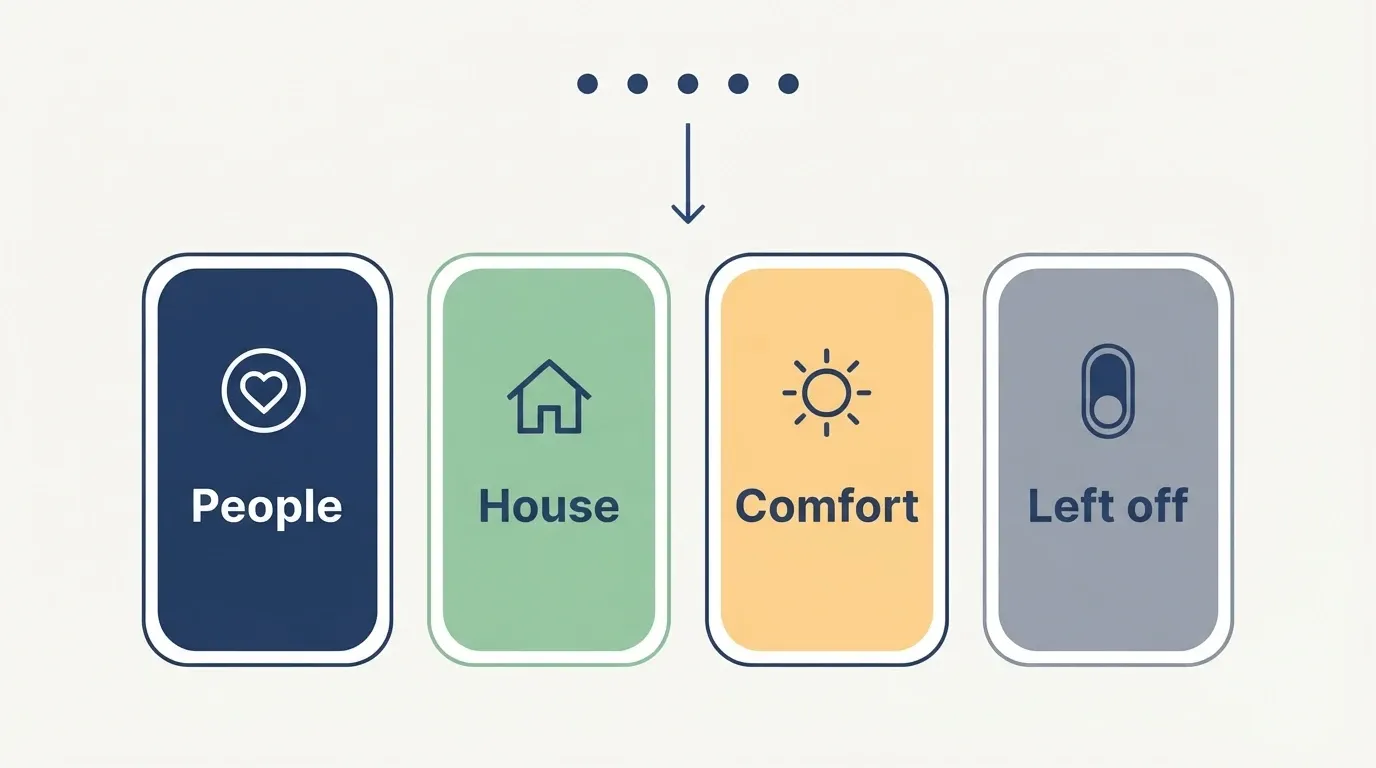
Sort every candidate into one of four groups before you meet the installer. The groups are about consequences, not convenience.
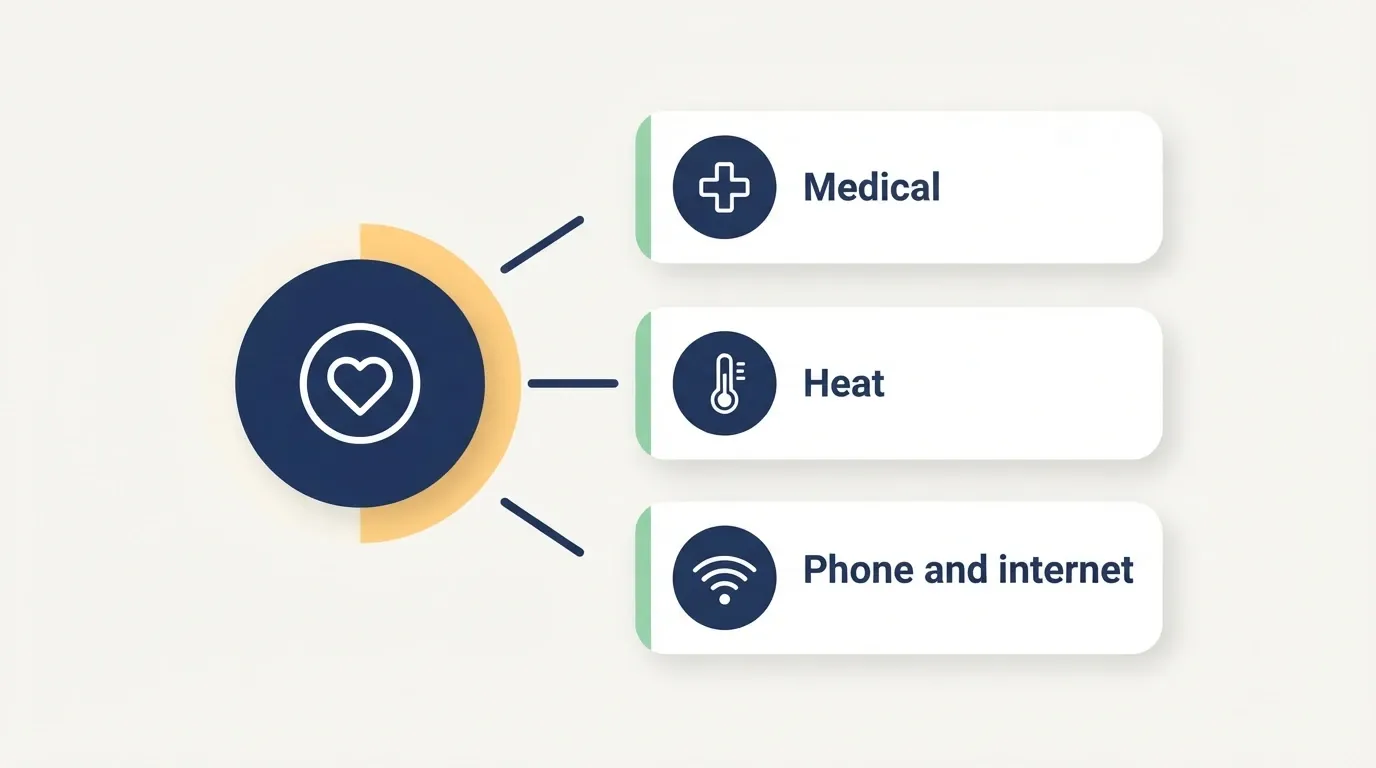
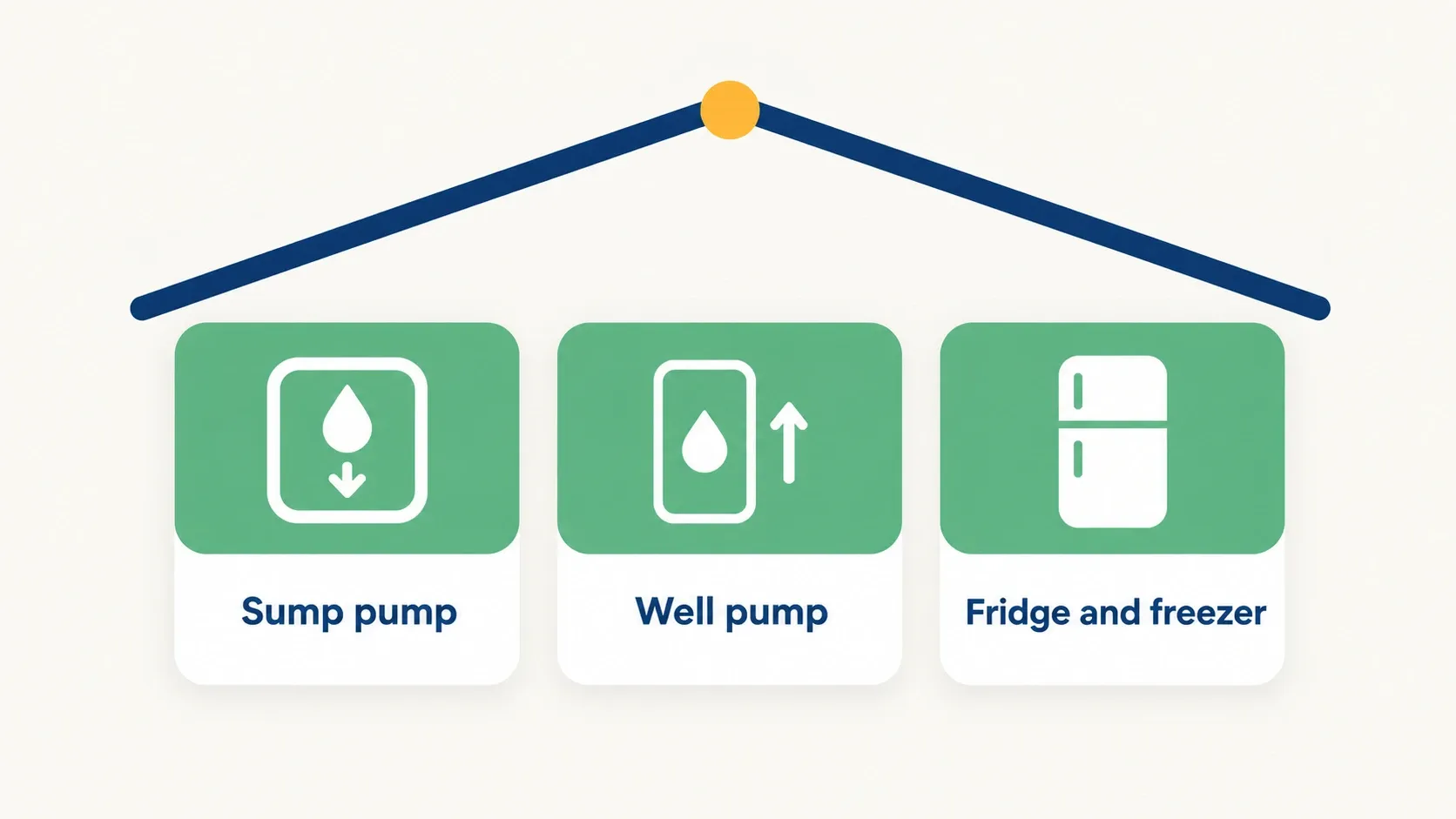
A few lights, a microwave circuit, a television, a garage door opener. These are real conveniences, and each one is a small draw on the battery for as long as the outage lasts.
Central air conditioning, electric ranges and ovens, electric clothes dryers, electric water heaters, pool pumps and hot tubs. EnergySage notes that a standard electric dryer can draw 5 kW or more, and that two hours of drying uses about 10 kWh, which is a large share of a typical battery gone on one load of laundry. These loads are why whole-home backup costs so much more than essential-loads backup.
Climate can move a load up the list. Cooling in a desert summer, or heat in a northern winter, can be a safety issue rather than a comfort. If that is your house, raise it with the electrician as a Tier 1 need and let them tell you what it would take.
Two separate limits decide whether a list fits, and they are easy to confuse.
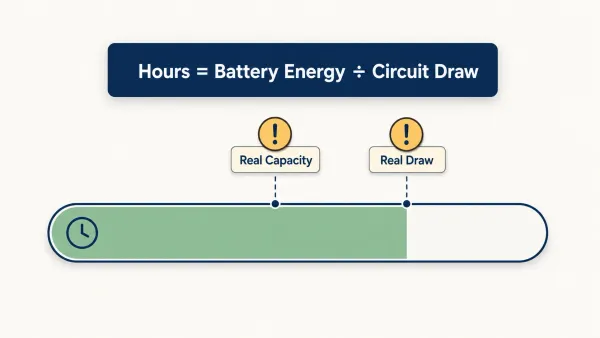
Capacity, in kilowatt-hours, decides how long the backed-up circuits run. Every circuit you add shortens the outage the battery can cover. Finding your annual kWh on your own bill gives you the starting number for that part of the conversation.
Power, in kilowatts, decides what can run at the same moment. Every battery system has a continuous power rating. If the loads running together exceed it, the system trips or shuts down instead of running them. Motors add a third wrinkle: compressors and pumps pull a brief surge when they start, well above their running draw, so a list that fits on paper can still fail the moment the refrigerator and the well pump start together.
Only the electrician can put real numbers on those limits for your house, because they depend on the specific battery, the specific appliances and how the circuits are wired.
An essential-loads design has a hard ceiling, and the most common way people hit it is by treating the backup panel as a whole-house panel once the lights are on.
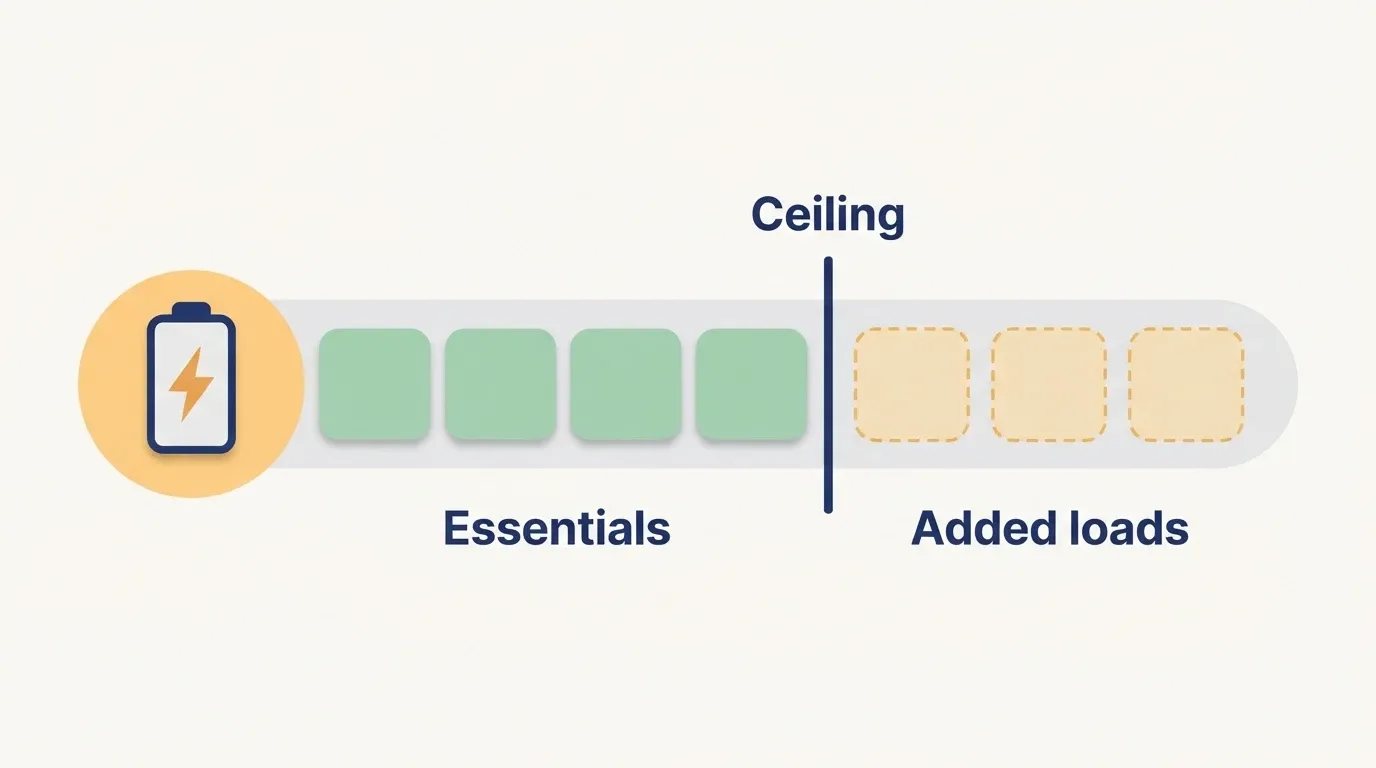
Running extension cords from a backed-up outlet to a space heater, a portable air conditioner or a second refrigerator puts loads on circuits, and on a battery, that were never sized for them. The mild outcome is a tripped breaker or a battery system that shuts itself down halfway through the outage, which is exactly when you need it. The serious outcome comes from people "fixing" the trips: swapping a breaker for a larger one, or rewiring a circuit to force more current through it, can overheat wiring that was sized for the original breaker. That is a fire risk.
Every jurisdiction adopts its own version of the electrical code and its own permit rules, so what your electrician can and cannot do also depends on where you live. The permit and inspection exist partly to check exactly this work.
A traditional essential loads panel is fixed: the circuits moved into it are the circuits you get, and changing the list means paying an electrician to move breakers again. EnergySage's guide says smart load panels, which let you choose from an app which circuits get power during an outage, are replacing traditional critical load panels, and that the choices made at a solar-plus-battery install are otherwise hard to undo.
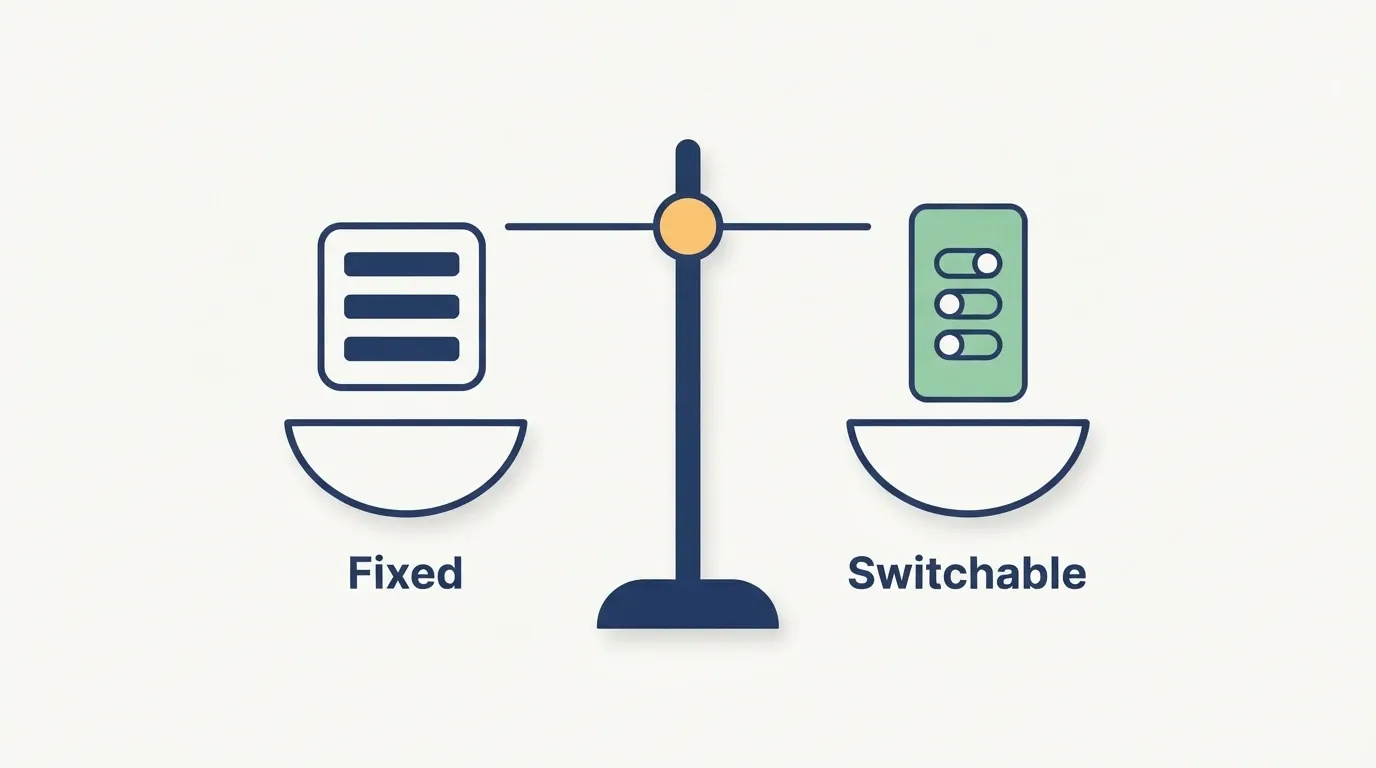
The trade-off is real on both sides. A switchable design lets you shed the dryer circuit and keep the well pump, or change the list when a new baby or a medical device arrives. It also costs more, and it hands the homeowner decisions in the middle of an outage that a fixed panel makes in advance. Neither is automatically better. Ask for both prices, and ask what happens to the switchable version's settings if its app or the company behind it goes away.
Many proposals arrive with a standard essential-loads list already filled in: refrigerator, some lights, some outlets, internet. That list is not wrong. It is simply generic, and it was chosen by someone who has not seen your basement, your well or your medical needs.
A default list suits the seller because it is quick to quote and quick to install. It may not suit you. The circuits that matter most in your house, a sump pump in a wet basement, a well pump on a rural lot, a device someone sleeps with, are exactly the ones a generic list can miss. Put your Tier 1 and Tier 2 circuits on the table before the design is finished, and add them to the questions to ask before you sign.
If two installers quote different lists, the prices are not comparable until the lists match. Comparing solar quotes works the same way here: normalize what is being delivered first, then compare the price.
Before you sign, the proposal or contract should name:
If the battery is tied to a utility or state program, check what that program asks of the battery before you settle the list. Home battery rebates in 2026 explains what those programs typically want in return.
It is a separate breaker panel that a home battery powers during a grid outage. Only the circuits moved into it stay on; the circuits left in the main panel go dark until the utility restores power. It is also called a critical loads panel or backup loads panel.
Commonly the refrigerator, some lights, internet equipment, phone charging, and where relevant a sump pump, well pump, medical equipment or furnace controls. Large loads such as central air conditioning, electric dryers, ranges and water heaters are usually left off.
No. Moving circuits means working inside a breaker panel, which is licensed electrician work in the US and usually needs a permit. The homeowner's part is deciding priorities and giving the electrician an accurate picture of what each circuit serves.
The battery system can trip or shut down, which may cut backup power partway through the outage. Forcing more current through a circuit by changing breakers or wiring can overheat the wiring and create a fire risk. If trips keep happening, stop adding loads and call the electrician.
Not automatically. Whole-home backup keeps more running but needs more battery capacity and power, which costs more. An essential loads panel makes a smaller battery last longer. Which one fits depends on your loads, your climate and your outages, and the sizing is the electrician's call.
One email a week with new guides, tips, and solar news. Zero fluff, no sales pitch.