Do I Need a Battery With Solar? The Real Trade-Off

United States only. This page names no company, quotes no figure and contains no price. It is about which obligations survive an installer's failure and which do not.
You cannot know whether a company will exist in five years. What you can do is find out how much of your system depends on the answer.
That is a better question, it is answerable before you sign, and most buyers never ask it.
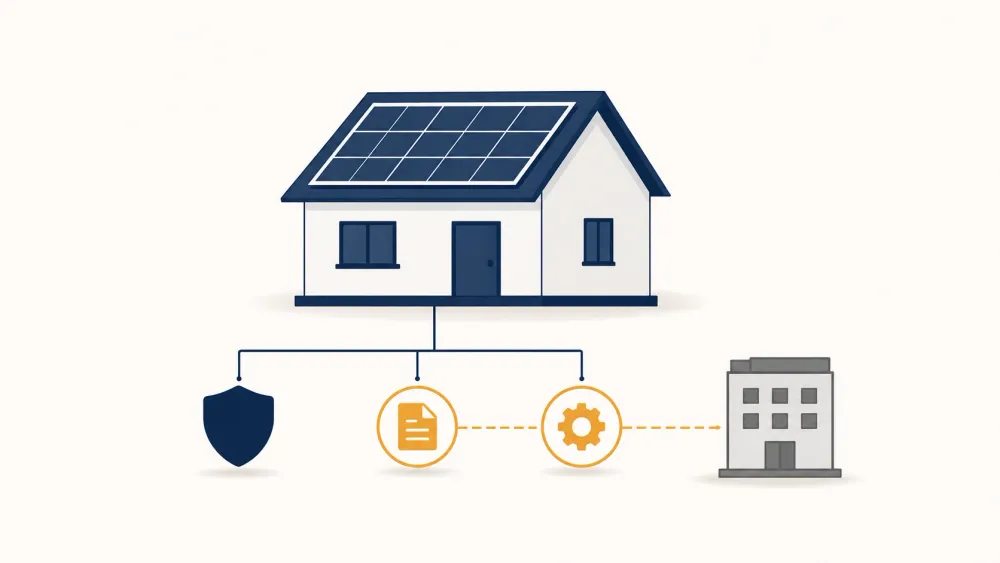
The word "warranty" in a solar proposal covers several obligations that live in different places. Sorting them is the whole exercise, because they fail differently.
The panel manufacturer's product warranty. Covers defects in the panels. Held by the panel manufacturer.
The panel manufacturer's performance or output warranty. A commitment about how much the panels will still produce after a period. Also the panel manufacturer's.
The inverter manufacturer's warranty. A separate company again, and usually a shorter term than the panels.
The installer's workmanship warranty. Covers the installation itself: mounting, penetrations, wiring, the roof. This one is held by the installer, and this is the one that dies with them.
So the honest framing: an installer's bankruptcy generally does not void your panel or inverter warranties. It removes the company that would have handled the claim, and it removes your workmanship coverage entirely.
Four practical consequences, in the order people meet them.
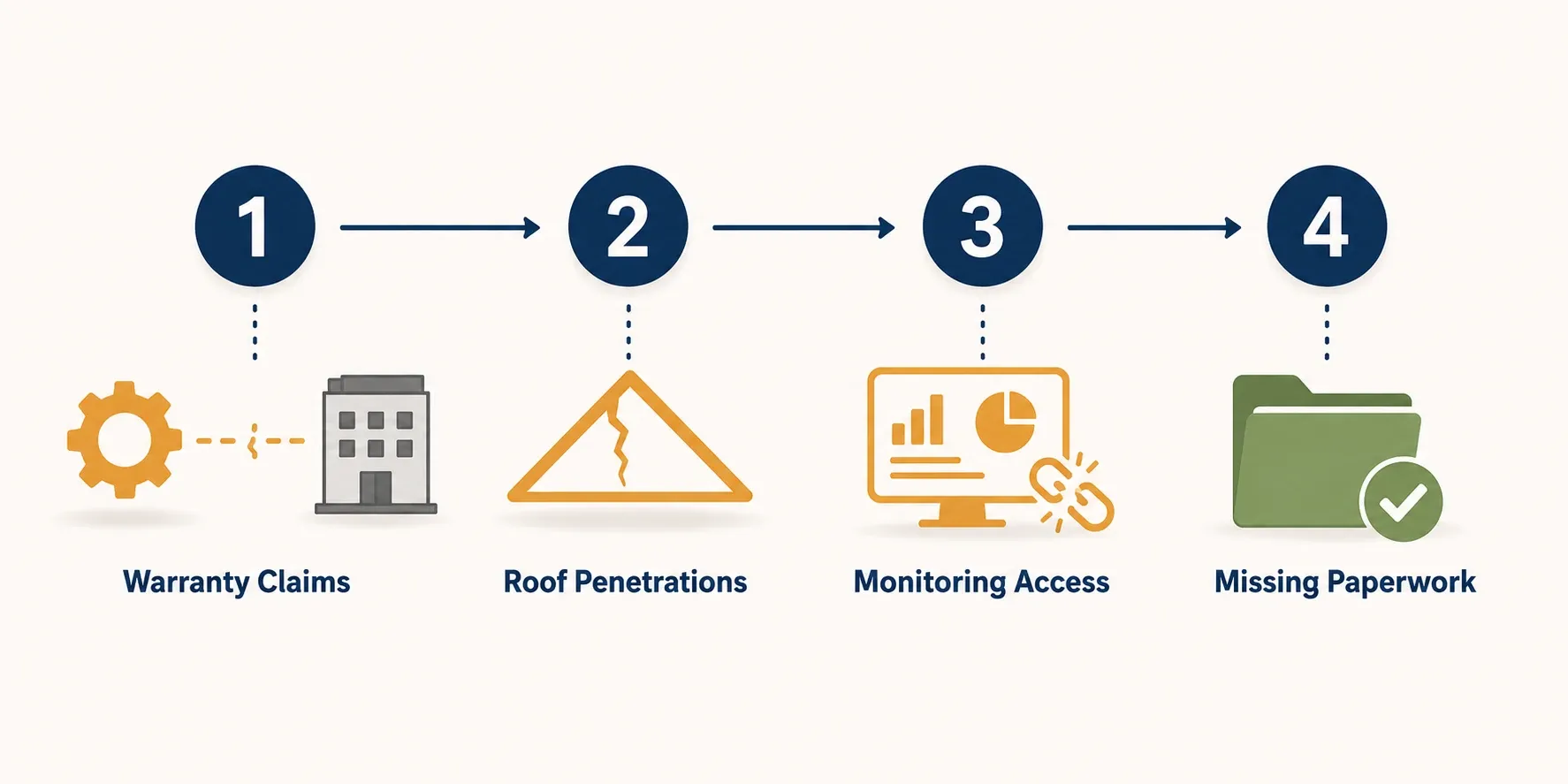
1. Nobody is coordinating a manufacturer claim. Manufacturer warranties normally require a qualified party to diagnose and to do the work, and the manufacturer covers the part rather than the labor. You keep the part and lose the person, and finding another company willing to service somebody else's installation is harder and more expensive than it sounds.
2. Roof penetrations become your problem. The most consequential part of a residential solar installation is where it goes through the roof. If that leaks in year six and the installer is gone, the workmanship warranty that covered it is gone too.
3. Monitoring and account access can break, particularly where the installer set up the monitoring under its own account.
4. Nobody has your paperwork. Permits, interconnection agreement, as-built drawings, serial numbers. This is the one you can fix in advance and it costs nothing.
Six, none of which requires you to understand solar.
Your state's secretary of state business registry shows the registration date and the entity status, free. A company registered recently, or one that has recently changed name or entity, is worth a question.
A name change is not automatically bad, and it is worth knowing about, because a warranty is held by a legal entity rather than by a brand.
Your state's contractor licensing board. Whether the license is current, what it covers, and whether there are complaints or disciplinary actions. Licensing for solar work is state level.
Many companies sell and subcontract. Ask directly: who will physically be on my roof, and who holds the workmanship warranty for their work? If the answer is a subcontractor, ask which entity's warranty you are getting.
This is the question most buyers never ask and it is the important one.
Some warranties are backed by a third party, an insurer, or a manufacturer program that continues if the installer fails. Some are a promise from a company with no backing at all.
Ask: "Is the workmanship warranty backed or insured by a third party, and if so, by whom?" Get the answer in writing. A yes is a meaningful difference in what you are buying; a no is not disqualifying, and it tells you what the promise is worth.
Some manufacturers maintain certified installer networks and some offer extended coverage through them, which can mean a route to service if your original installer is gone.
Ask which equipment is being installed and whether the manufacturer has such a program. The manufacturer's own site is the source.
Credentials in this industry are held by people rather than by companies, which means they leave when the person does. What a certification badge does and does not prove sets out why "we are certified" is not a company-level statement.
Do this at handover with any installer, however solid. It is fifteen minutes and it is what makes you serviceable by somebody else later.
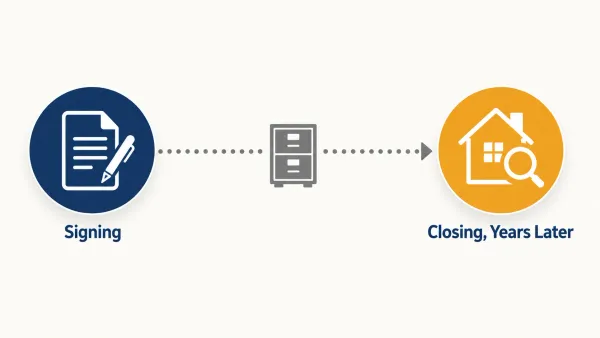
Scan all of it and keep it somewhere that is not a filing cabinet in the garage. A future owner of the house will want it too, and what solar does to a home sale depends heavily on whether the paperwork exists.
Five steps, in order.
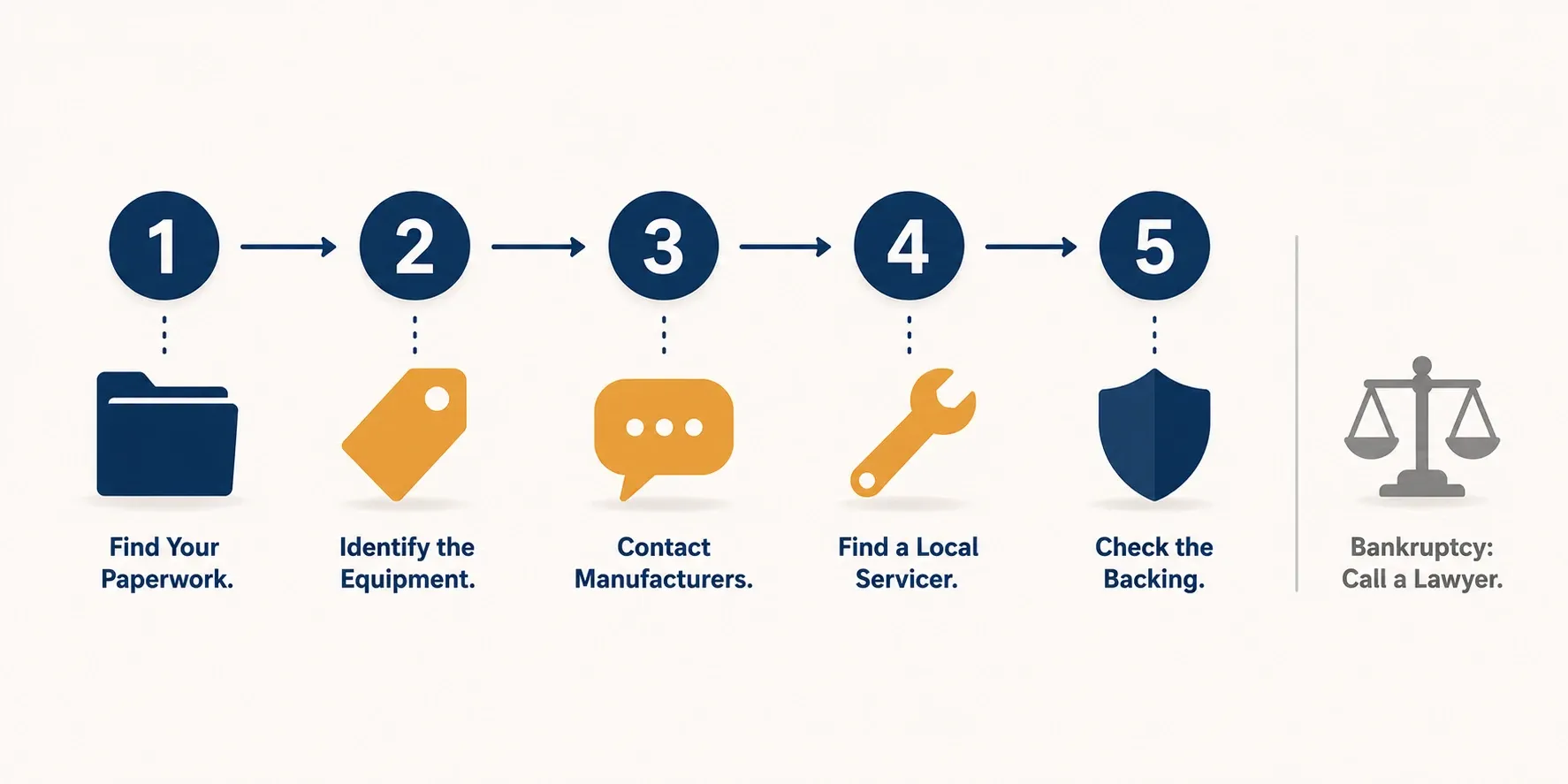
1. Find your paperwork. Everything above. If you do not have it, your utility has the interconnection agreement and your building department has the permit.
2. Identify the equipment. Panel and inverter make, model and serial numbers, from the labels on the equipment itself if the paperwork is gone.
3. Contact the manufacturers directly. Panel and inverter warranties are theirs, not the installer's, and they will tell you what is still covered and what they require.
4. Find a local company that services other people's installations. Not all do. Ask specifically whether they will take on a system they did not install, and expect to pay a diagnostic fee.
5. Check whether the workmanship warranty was backed. If it was, the backer is who you contact. If it was not, that coverage is gone and you are self-insuring the installation.
And if the company is in bankruptcy proceedings rather than simply gone, that is a legal matter with deadlines, and your state attorney general's office or a consumer law attorney is the right call rather than a solar site.
A workmanship warranty is a promise from a company, and its value is the probability that company exists when you need it, multiplied by whether they honor it.
That is not cynicism, it is how to price the difference between two quotes. A longer workmanship warranty from a company you cannot verify is not obviously worth more than a shorter one from a company with a decade of registry history and third-party backing.
Which is also why the cheapest quote is not always the cheapest system, and the costs that do not appear on a proposal include the ones that arrive when nobody answers the phone.
If my installer goes out of business, do I lose my panel warranty? Generally no. The panel product warranty, the panel performance warranty and the inverter warranty are held by the manufacturers, not by the installer, so they do not vanish with the company. What you lose is the workmanship warranty, which is the installer's own, and the company that would have diagnosed a fault and coordinated a manufacturer claim for you.
Which warranty covers a roof leak around the panels? The installer's workmanship warranty. It covers the installation itself, including the mounting, the wiring and the penetrations through the roof, which is the most consequential part of a residential installation. That is exactly the coverage that ends if the installer is gone, so it is the one worth asking hard questions about before you sign.
How do I check a solar company's track record before signing? Two free public records do most of the work. Your state's secretary of state business registry shows when the entity was registered and whether it is in good standing, which also reveals recent name or entity changes. Your state's contractor licensing board shows whether the license is current, what it covers, and whether there are complaints or disciplinary actions. Neither requires you to understand solar.
Is a longer workmanship warranty always the better deal? Not on its own. A workmanship warranty is a promise from a company, so its value depends on that company existing when you need it and honoring it then. A longer term from a company you cannot verify is not obviously worth more than a shorter term from one with a long registry history and third-party backing. Ask in writing whether the warranty is backed or insured by a third party, and by whom.
What paperwork should I collect at handover? The signed contract with the workmanship warranty terms, the manufacturer warranty documents for the panels and inverter with model and serial numbers, the permit and final inspection sign-off, the interconnection agreement with your utility, as-built drawings or a system layout, and the monitoring account credentials in your own name rather than the installer's. Scan it and store it somewhere other than the garage. That file is what makes your system serviceable by another company later.
An installer's failure does not void your panel and inverter warranties, which belong to the manufacturers. It removes your workmanship warranty, which covers the roof penetrations, and it removes the company that would have handled a manufacturer claim. Before signing, check the state business registry and licensing board, ask who physically installs and who holds their warranty, and ask in writing whether the workmanship warranty is backed by a third party. Then collect every document at handover and keep the monitoring account in your own name. That paperwork is what makes you serviceable by somebody else.
One email a week with new guides, tips, and solar news. Zero fluff, no sales pitch.