Do I Need a Battery With Solar? The Real Trade-Off

Reviewed on August 5, 2026.
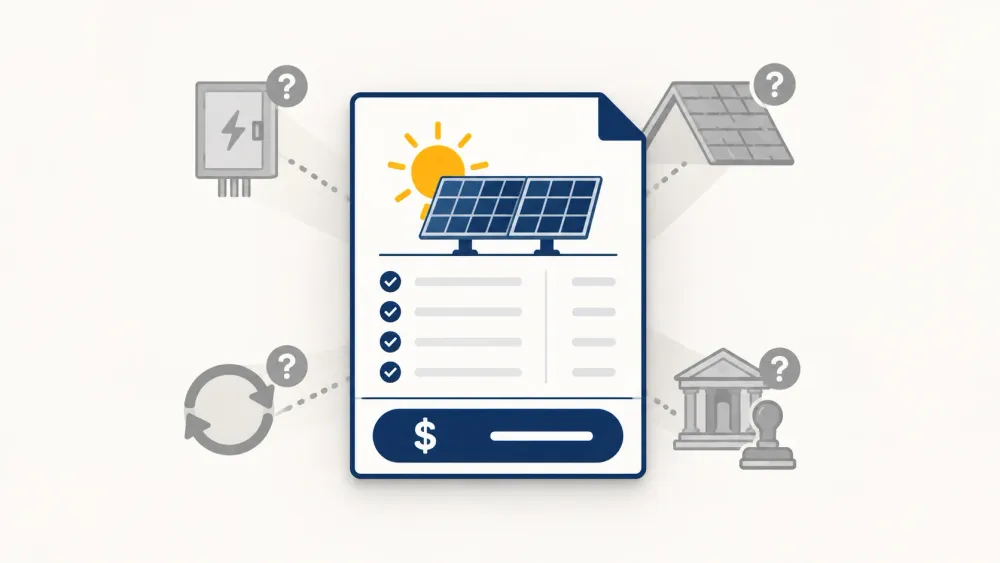
A solar quote in the United States prices the panels, inverter, mounting hardware and labor to put a system on your roof. It does not reliably price what a site visit finds afterward, such as an electrical panel upgrade or roof work, what your payment method adds, such as a loan dealer fee, what recurs after the system is switched on, such as monitoring or an eventual inverter replacement, or what your utility and permitting office charge separately. Those are the categories that show up later. This article names them by cause, not as a flat list, so you can check your own quote against each one.
Most bundled solar quotes are priced off a standard install: a roof in normal condition, an electrical panel with enough capacity, no major shading, and a straightforward permitting jurisdiction. When your house matches that assumption, the quote holds. When it doesn't, the difference gets added later, usually after a site visit, as a change order rather than a line item you saw upfront. The categories below fall into three groups: costs a site visit reveals that a sales quote can't predict, costs that depend on how you pay rather than on the system itself, and costs that recur after installation. A fourth group, permitting and interconnection fees, sits partly inside the installer's bundle and partly outside it depending on the company and your jurisdiction.
No single dollar figure applies to all of these, because they depend on your roof's condition, your home's existing electrical service, your utility's fee schedule, and which of these your specific installer chooses to bundle into the headline price versus itemize separately. A large national dataset that breaks down what share of a typical system's cost is hardware versus everything else exists in principle, but a current, citable edition of that breakdown was not accessible while researching this article, so no percentage is stated here. Ask your installer directly which of the categories below their number already includes.
A sales estimate is usually built from a satellite image and a utility bill, not a technician standing on your roof.
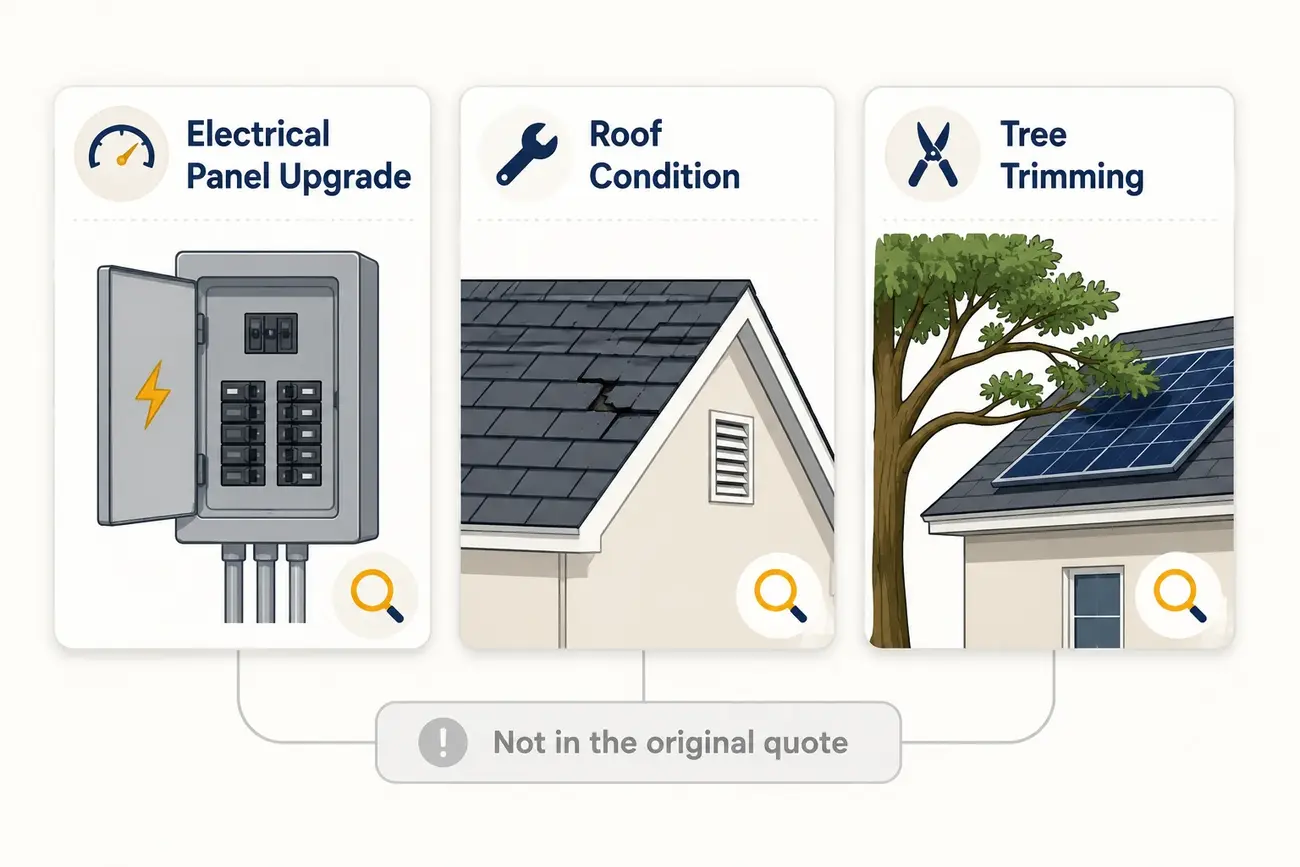
Three things commonly surface once someone actually inspects the property:
None of these is universal. A newer home with a modern panel and a recently replaced roof may need none of them. The only way to know is a site visit before you sign, not after.
The same system priced the same way can carry different total costs depending on how you finance it. A cash purchase has no financing cost beyond the price itself. A solar loan often carries a dealer fee baked into the interest rate rather than shown as a separate charge, a practice examined in more depth in Solar Loan Dealer Fees: The Cost Buried in Your Rate. A lease or power purchase agreement typically includes an annual payment increase, and how that compounds over the contract term is not something a first-year quote shows you at all. Cash, Loan, Lease or PPA: How to Pay for Solar in 2026 walks through how these four payment structures actually compare, because a headline system price without a financing structure attached is not a complete number.
A solar system is not a one-time purchase you never think about again.
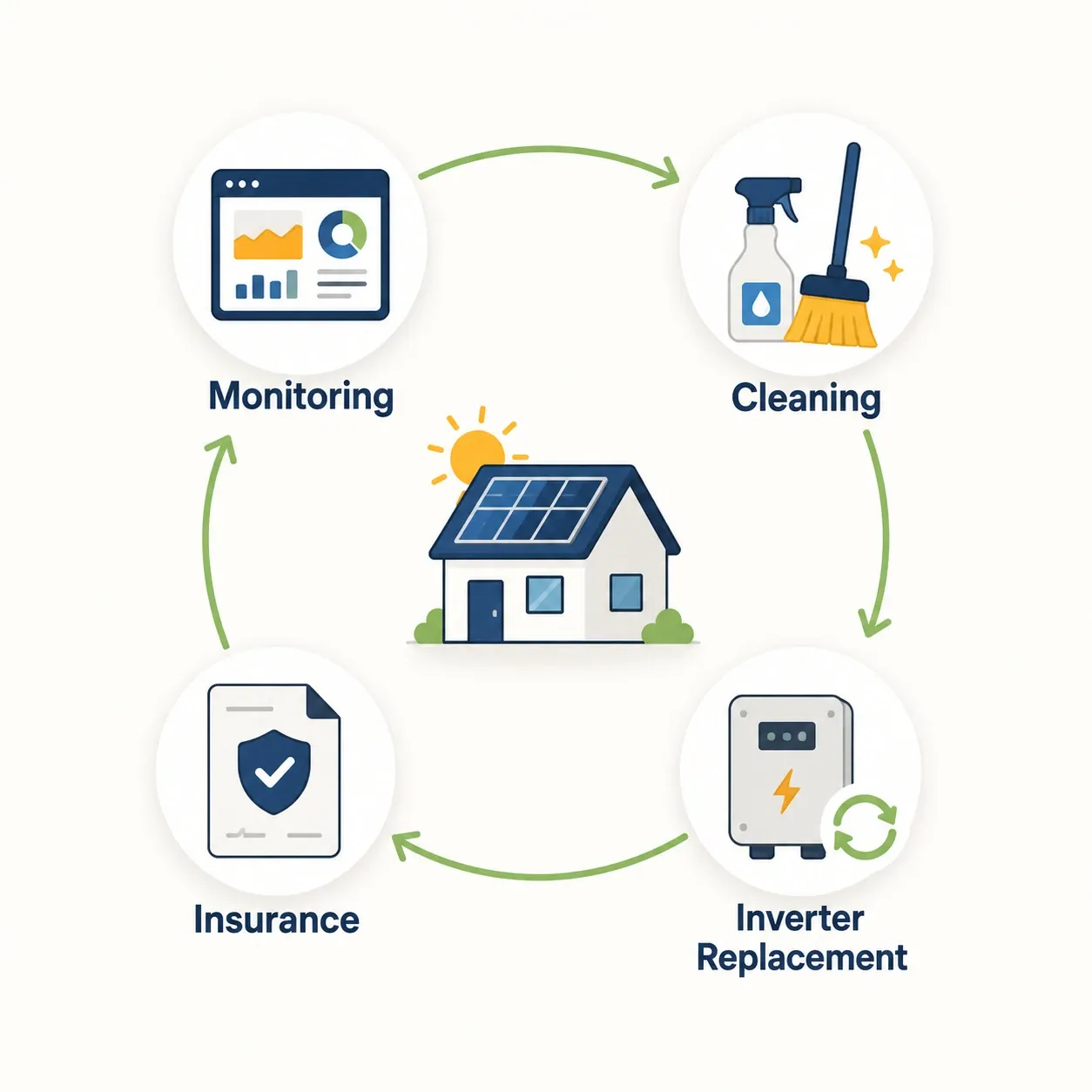
After activation, expect these categories to reappear over the system's life, though not on a fixed schedule and not at a price this article will estimate without a source:
Before a system can be turned on, it typically needs a building permit from your local jurisdiction, an inspection, and utility interconnection approval, sometimes with its own application fee. Some installers include all of this in the quoted price. Others itemize it separately, and a few leave it off the initial number entirely and add it once the permit office sets its fee. These fees are set locally, by your city or county and by your specific utility, so they are not a number this article can state nationally. Ask your installer directly: does the quoted price include every permit, inspection, and interconnection fee your project will need, or are any of those separate?
The fix for all of the above is not a bigger number, it's a more specific quote. Before you sign anything, ask your installer to confirm in writing:
A quote that can't answer these plainly is not necessarily dishonest, but it is incomplete. Compare what you're holding against these categories directly, and for the underlying price it's built on, see What Home Solar Actually Costs in the US in 2026 and Cost Per Watt: The Only Number That Compares Two Quotes, which explains why a lower headline price can still be the more expensive system once these categories are accounted for. If enough of these costs stack up on your specific house, it's worth reading When Home Solar Is a Bad Financial Decision before you sign, and the broader question of whether solar pencils out at all starts at Are Solar Panels Still Worth It in the US in 2026?
What is the most commonly missed cost in a solar quote? Electrical panel upgrades and roof work are the two most frequently cited categories, because both depend on an in-person inspection that many initial quotes skip in favor of remote estimates. Whether either applies to you depends on your home's specific condition, not on a national average.
Does every solar quote include permit and interconnection fees? No. Some installers bundle these into the total price, others itemize them separately, and a few add them after the fact once the local permitting office sets its fee. Ask directly which approach your installer uses.
Are financing costs like dealer fees always disclosed separately? Not always. A loan dealer fee is often built into the interest rate rather than shown as its own line item, which is why comparing the cash price to the financed price matters. See Solar Loan Dealer Fees for how this works.
Will I need to pay for panel cleaning? It depends on your climate and roof pitch. Some systems self-clean adequately with rain; others in dusty or pollen-heavy regions benefit from occasional professional cleaning. This is a recurring cost some owners choose to pay for and others don't.
Can insurance costs change after I install solar? It's possible. Some homeowners insurance policies adjust premiums or require notification when a solar system is added. This varies by insurer, so confirm directly with your provider rather than assuming your policy is unaffected.
One email a week with new guides, tips, and solar news. Zero fluff, no sales pitch.