Solar Panels for Heat Pump Home: Sizing Guide

United States only. Export-rate figures below are named to California's Net Billing Tariff as one documented example; every state and utility sets its own numbers, and this page is not a quote for your address. Sources read 2026-09-18.
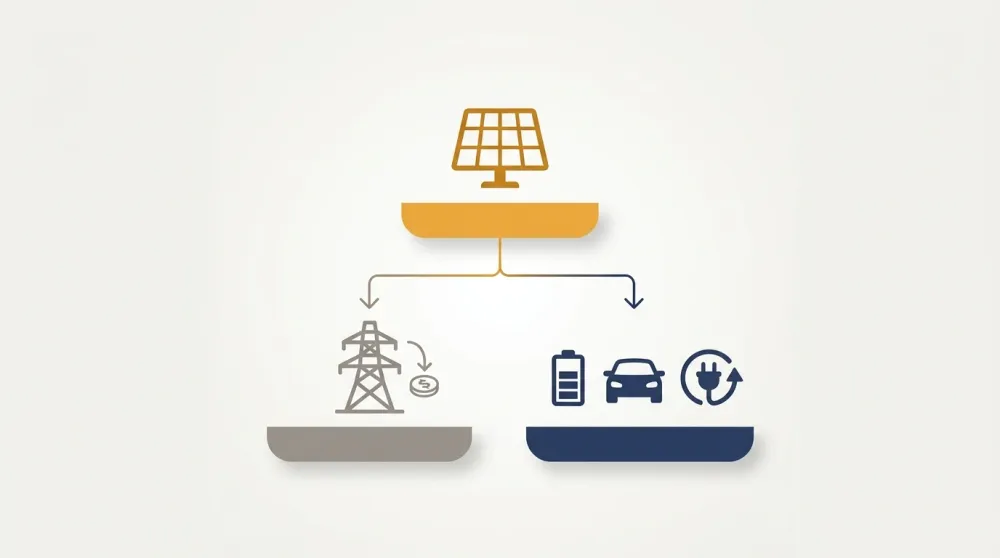
The short answer on oversizing a solar system under NEM 3.0-style export rates: it rarely pays for itself through exports alone. Where an old-style net metering tariff credited an exported kilowatt-hour at close to the retail rate, a NEM 3.0-style tariff credits it at the utility's avoided cost, which runs well below what you pay to import power. Extra panels sized to sell surplus back to the grid mostly generate electricity that earns a fraction of what it would have earned five years ago. Oversizing can still be the right call, but usually only when the surplus has somewhere to go besides the grid: a battery, a car you are about to buy, or a load you will add soon.
"NEM 3.0" is California's name for its current export tariff. The California Public Utilities Commission adopted it as the Net Billing Tariff in Decision D.22-12-056, and as the CPUC's Net Billing Tariff page states as of 2026-09-18, it applies to Pacific Gas and Electric, Southern California Edison and San Diego Gas and Electric customers who filed an interconnection application on or after April 15, 2023.
The mechanism, not just the name, is the part spreading to other states: instead of crediting your export near the retail price, the utility credits it against an avoided-cost calculation, which is closer to what it would cost the utility to buy that power on the wholesale market. Several other states have adopted or proposed similar avoided-cost export structures under their own tariff names, which is why this article treats "NEM 3.0-style" as a category rather than a California-only term.
The CPUC also notes the Net Billing Tariff is under periodic review, so the specific credit is not fixed even where it already applies. Whatever state you're in, ask your utility for the export rate schedule that applies to your address today, not the one a proposal was built on last year.
Under a retail-rate export arrangement, a kilowatt-hour you sent to the grid in April was worth close to the same as a kilowatt-hour you pulled back in December. That made annual energy balance, meaning offset, a reasonable stand-in for bill savings, and it made a bigger system a fairly safe bet: whatever you didn't use yourself still banked at nearly full value. What offset actually measures, and why 100% was never a law of physics, is the background piece for that older assumption.
Under an avoided-cost export arrangement, that symmetry breaks. The panels sized to cover your own daytime and evening use are worth roughly what they always were. The panels sized beyond that, the ones whose whole job is to export a surplus, are now worth only what the avoided-cost rate pays for that hour, which most solar-heavy afternoons is close to the bottom of the rate schedule. A system that pencils out well at, say, 100% of your annual usage does not automatically pencil out at 130%, because the last increment of panels is now competing on a much worse rate than the first increment.
There is a real incentive on the other side of the table, and naming it plainly does not make it dishonest. A larger system is a larger contract, and because permitting, design, interconnection paperwork and labor mobilization cost roughly the same whether the array is a little bigger or a little smaller, cost per watt tends to fall as systems grow. That is a genuine engineering economy, and it is also a reason a proposal can land bigger than your own arithmetic without anyone doing anything wrong. Why an installer's recommended size often runs larger than the one you calculated walks through the other legitimate reasons a number grows, alongside this one. The useful move is not suspicion; it's asking which reason is operating in your specific proposal, and asking for a second proposal at your own calculated size so you can compare the payback of the difference.
Four cases where a bigger system is still the better buy, even under a low export rate:
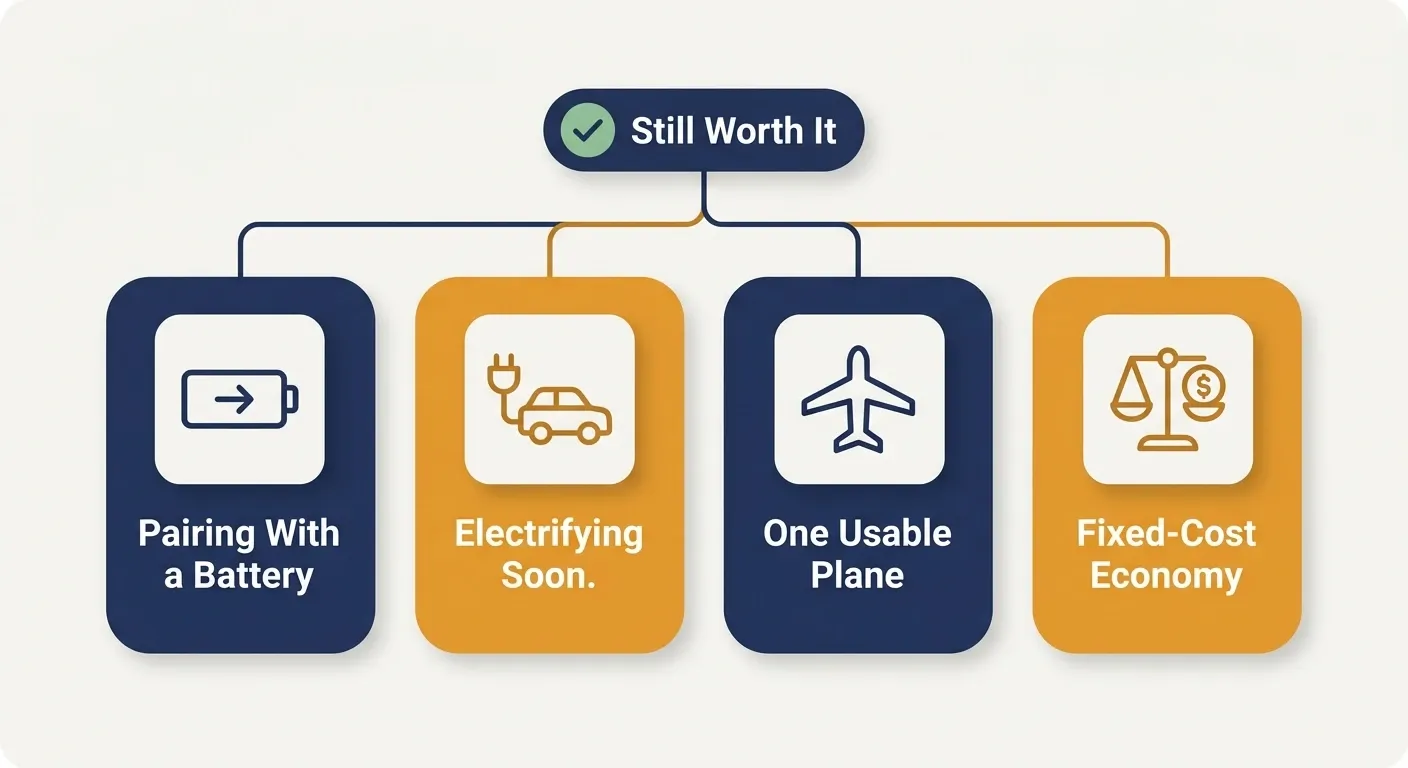
You're pairing it with a battery. Instead of exporting midday surplus at the avoided-cost rate, a battery stores it and discharges it during the evening hours when your utility charges the most to import power. The value of self-consumed and stored solar can be several times the export rate, which is the entire reason NEM 3.0-style tariffs were designed the way they were: to push storage adoption rather than grid export.
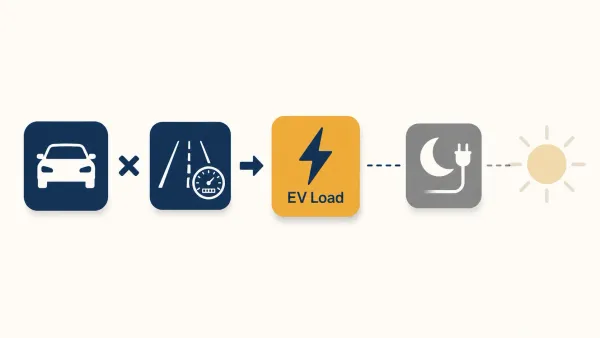
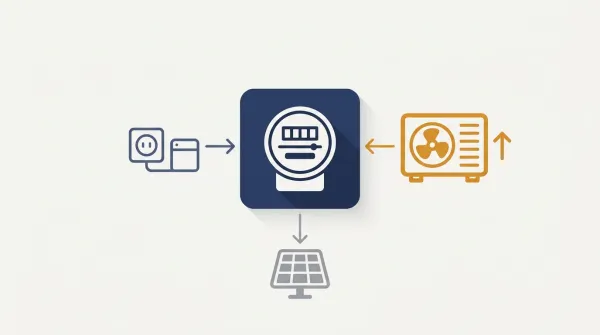
You're about to electrify something. An EV, a heat pump, induction cooking. Sizing for load you will add within a year or two is usually cheaper than a second installation later, because a second project repeats the fixed costs described above.
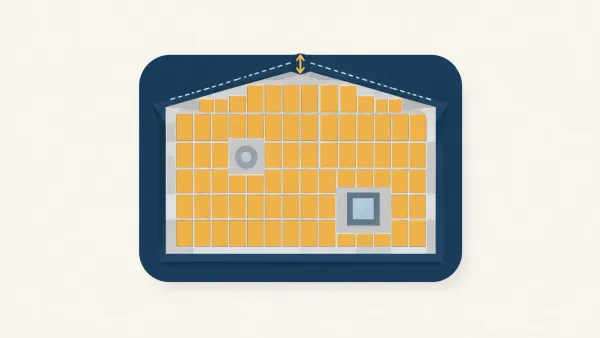
Your roof only has one usable plane, and adding to it later would mean a second, worse plane.
The fixed-cost economy described above is large enough on its own that a somewhat bigger system still costs less per watt, even after accounting for the lower value of the surplus energy. Whether that math clears depends on your actual quote, not a rule of thumb.
If oversizing is being pitched to you as a way to feed a battery for backup power, know the safety line before you agree to a size. A battery and backup system sized only for essential circuits, meaning the panel a licensed electrician wires to survive an outage, is not the same thing as whole-home backup, and feeding it more solar than that subpanel and battery combination is rated for does not make it act like whole-home backup. Overloading a backup system sized for essential loads only is a real risk, not a technicality. Panel and backup-system sizing, and which circuits sit on the backup subpanel, is a licensed electrician's determination, not a homeowner's or a salesperson's, and it is worth getting that sizing in writing before you agree to a larger array built around it.
A bigger array does not only change what your exports are worth; in some jurisdictions it can also change which interconnection review track your application falls into, and a different track can carry its own fees and timeline. The stack of interconnection charges most quotes never itemize covers how those charges are structured and why they are set by your state and utility rather than nationally. Before agreeing to a size that is meaningfully above your own calculated usage, ask your installer directly whether that size changes your interconnection review path or its charges in your state.
If a proposal talks you into a larger system today and you want more time to check the export math against your own utility's current rate, remember that federal law gives most people who buy at home or at a location away from the seller's regular place of business a window to cancel.
The Federal Trade Commission's Cooling-Off Rule, as stated on ftc.gov and read 2026-09-18, requires door-to-door and similar in-home sales above its dollar threshold to carry written cancellation rights good for three business days, on top of whatever additional window your own state adds for home-improvement or solar contracts specifically.
How to find your own cancellation deadline and who confirms it is the page to read before that window closes, because the deadline and the paperwork that starts the clock differ by state and this page cannot state either for you.
Four questions, and a competent company can answer all four in minutes:
None of the figures above are a quote for your address. Ask your utility for the export rate schedule that applies to new applications today, ask your state's public utilities commission page for the tariff that replaced or is replacing net metering where you live, and ask your installer to show the assumption in writing. Export rates, review tracks and cancellation windows are all set at the state or utility level, they change, and the only version that matters is the current one where you live.
Does oversizing a solar system still make sense under NEM 3.0-style export rates? Usually only when the surplus goes somewhere other than the grid, such as a battery, a planned EV or heat pump, or a roof that would otherwise need a second, worse installation later. Sized purely to export more power, the extra panels earn the avoided-cost rate rather than the retail rate, which is usually a fraction of what older net metering paid. Compare a proposal at your calculated size against the larger one on payback, not on system size alone.
Is NEM 3.0 only a California rule? The name is California's, adopted by the CPUC as the Net Billing Tariff. Other states have built or proposed similar avoided-cost export structures under different names, which is why this article treats "NEM 3.0-style" as a pattern rather than a single state's rule. Your state's public utilities commission is the source for what applies where you live.
Why would a battery change the answer on oversizing? A battery lets you store midday surplus and use it yourself during evening hours when your utility charges more to import power, rather than exporting it at the lower avoided-cost rate. That shifts the value of the extra production from an export credit to an avoided import cost, which is usually worth more. Whether that math clears for your household depends on your usage pattern and your utility's rate structure.
Can a bigger system change what I'm charged to connect it? In some states and utilities, yes. Interconnection review is often structured in tiers, and a larger system can fall into a different review track with its own fees and timeline. Ask your installer directly whether your proposed size changes your interconnection review path before you agree to it.
What if I already signed for a bigger system than I wanted? Federal law gives many home-solicited sales a short cancellation window, and many states add additional protection for home-improvement or solar contracts. The deadline and the paperwork depend on how and where you signed and on your state, so confirm your specific deadline before it passes rather than assuming a number from a general article.
One email a week with new guides, tips, and solar news. Zero fluff, no sales pitch.